Two related fruits, two harvest windows
Lychees and longans are related fruits grown in Florida’s warmer areas, especially South Florida. Both have a thin outer shell surrounding translucent flesh and a single seed. They may appear at the same produce stand, but shoppers should not count on finding them together throughout the season.
Florida lychees generally arrive first, in late spring and early summer. Longans tend to follow in summer and may remain available later, sometimes into early fall. Those are useful guides, not fixed dates: variety, growing location and weather can shift when fruit is ready. The overlap may be short, and a particular grower’s harvest can come and go quickly.
Why availability can feel fleeting
Unlike produce stocked year-round from many growing regions, locally harvested lychees and longans often reach shoppers in concentrated bursts. A market might have plenty one week and little the next. Lychee harvests can also vary from year to year, so last season’s shopping routine may not work this time. Longans may offer another chance to enjoy a similar type of fruit after lychees fade, but their availability varies too.
If you are making a special trip, ask a seller whether fruit has been harvested recently and whether more is expected. Ask about the variety as well: different varieties can mature at different times and have distinct flavors. A sign saying “local” does not, by itself, tell you when the fruit was picked, so a short conversation is more useful than relying on the calendar alone.
How to tell them apart at the stand
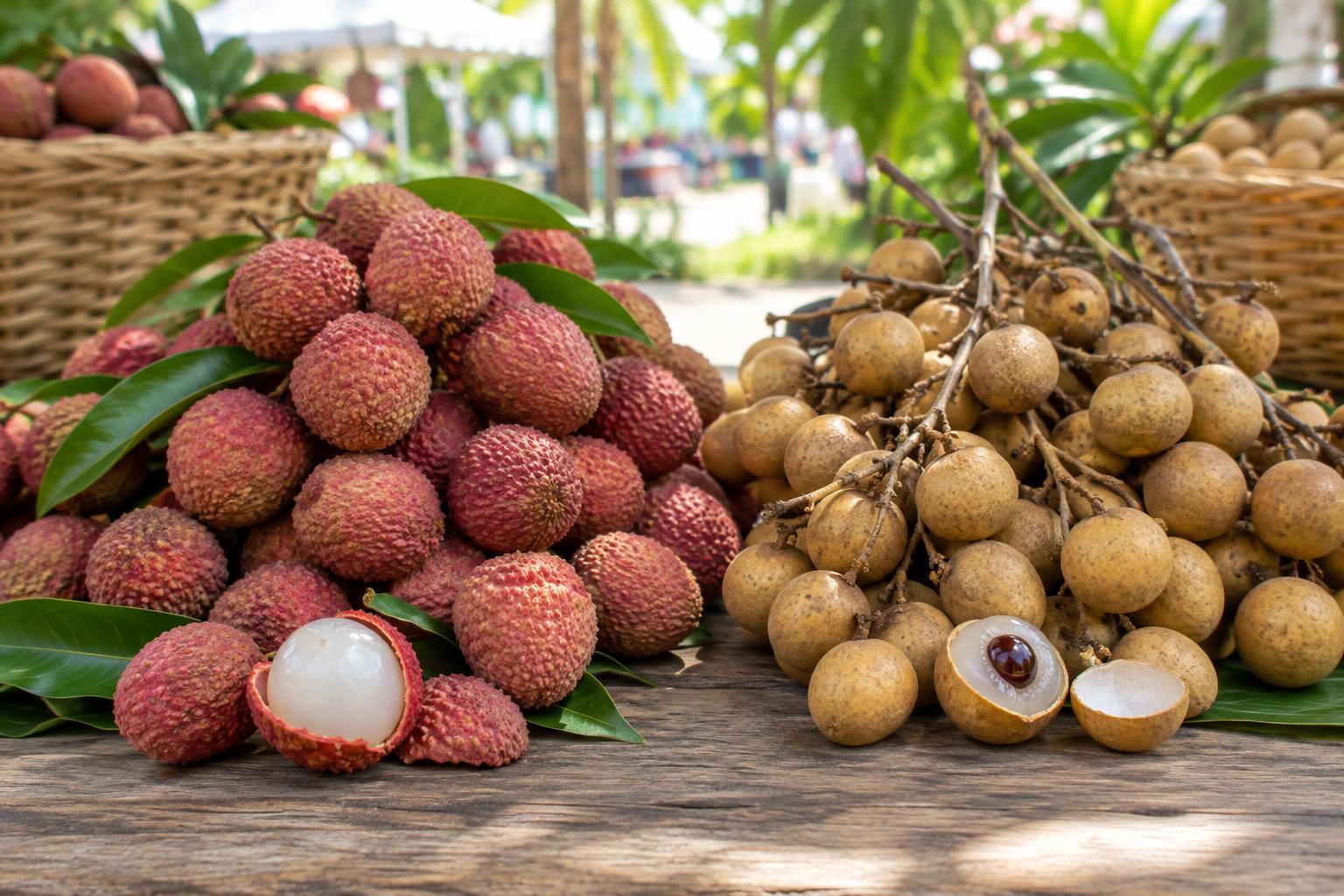
Lychees usually have a textured shell that turns pink or red as the fruit matures, though color varies by variety. Peel one and you will find glossy, pale flesh with a floral sweetness that can be balanced by a little tartness. Longans are typically smaller, with a smoother tan-to-brown shell. Their flesh is also pale and juicy, but the flavor is often described as milder, with a warm, honey-like sweetness.
For either fruit, look for pieces that feel full for their size and have intact skins without obvious leaks, mold or a fermented smell. A little browning on a lychee shell does not automatically mean the flesh is poor; the shell can darken as it dries. If a seller offers a sample, tasting is the simplest way to decide which variety you prefer. Avoid assuming that a bright shell guarantees good fruit inside.
Bring them home and keep them fresh
Both fruits are best enjoyed soon after purchase. Keep them cool, and refrigerate any you will not eat promptly. A loosely closed bag or covered container can help limit drying; avoid trapping excess moisture against fruit that is already damp. Check the batch as you use it and discard any pieces that develop mold or an off smell.
To eat either fruit, crack or peel away the shell, then enjoy the flesh while avoiding the seed. The flesh can cling to the seed, so take care when serving the fruit to children. For an easy market-season snack, chill the whole fruits and peel them just before eating. They also work in a simple fruit bowl or alongside citrus, where you can appreciate their different flavors without covering them up.
Shop for the season, not a promised date
The most helpful way to remember the distinction is that lychees usually signal the earlier part of Florida’s tropical-fruit season, while longans often carry it further into summer. If you miss the lychees, ask when longans might arrive. If both are on the table, take a small amount of each and compare them side by side.
Treat the harvest window as an invitation to stay curious rather than a deadline printed on a calendar. Ask what was picked nearby, choose fruit that looks sound, and buy an amount you can enjoy while it is fresh. That approach makes either fruit a welcome find, even when the season does not unfold exactly as expected.