When to look for Florida okra
Okra thrives in warm weather, making it a familiar sight at Florida produce stands during warmer parts of the year. Its timing can vary with the weather, the growing area and the farm, so a calendar is less useful than a conversation with the grower. Early in a local harvest, you may see small quantities; when plants are producing steadily, baskets of pods can appear in a wider range of sizes.
Fresh okra has a mild, grassy flavor and a texture that changes with the cooking method. Sliced into a simmering dish, it releases a thickening liquid. Cooked quickly in a hot pan or roasted in a single layer, it can keep more of its shape and develop browned edges. Either way, starting with tender pods makes preparation easier.
Size is a clue, not a guarantee
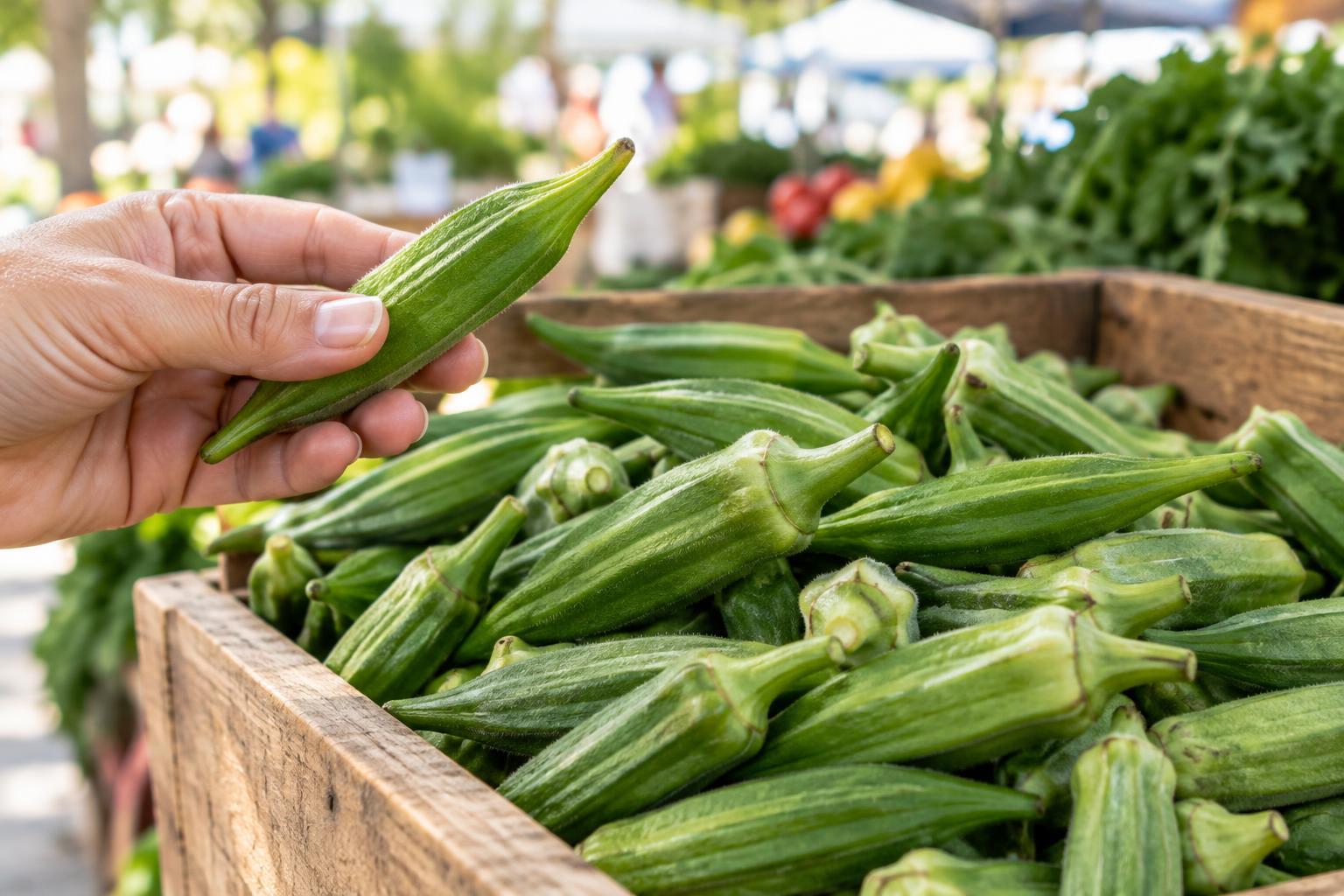
Many shoppers reach first for pods roughly two to four inches long. Small and medium pods are often tender because okra can become fibrous as it matures. Still, length alone cannot tell the whole story: varieties differ, and a larger pod picked at the right stage may cook well. A small pod that has sat too long after harvest may be less appealing than a firm, freshly picked larger one.
Look for pods that feel firm without seeming hard or woody. Their surfaces should look reasonably fresh, whether the variety is smooth or ridged. Pass over pods with extensive bruising, soft spots or damp, slippery patches. If the seller welcomes it, ask which sizes they recommend for your dish. Smaller pods are convenient for cooking whole; larger tender pods can be sliced for stews, sautés or roasting.
At home, trim a pod and cut across it with a sharp knife. A tender pod should slice without much resistance. If a pod feels tough or stringy, setting it aside is more practical than expecting a long cook to make it delicate. Check a few before chopping the entire batch, especially if the bag contains mixed sizes.
Keep pods dry, then use them soon
Okra stores best for a short time. If you will cook it soon after shopping, keep it out of direct sun on the way home and avoid crushing the pods beneath heavier produce. For a stay in the refrigerator, leave the okra unwashed, wrap it loosely in a dry paper towel and place it in a bag that is not sealed tightly. The crisper drawer is a convenient spot. A little airflow and protection from surface moisture can help prevent the pods from becoming damp and slippery.
Plan to cook refrigerated okra within a few days for the best texture. Check the bag rather than relying on a fixed deadline: remove any pod that is spoiling, and use the rest while it is still firm. Cold storage may darken or mark the surface of okra, so appearance matters alongside texture and smell when deciding whether it is still worth cooking. Wash the pods just before preparation and dry them well, particularly if you plan to roast or pan-cook them.
If you bought more than you can use promptly, freezing is an option. Wash and dry the okra, trim the stems without cutting into the pods, then blanch, cool and drain it before packing it for the freezer. Frozen okra will be softer after thawing than fresh okra, but it is handy for soups and stews.
Match your market purchase to the meal
Before filling a bag, decide how you want to cook your okra. For whole pods, choose a fairly even size so they finish at about the same time. For sliced okra, a mix of tender sizes is fine. Buy only what you can use in the next few days unless you have a plan to freeze the extra.
At the market, a simple question can be more helpful than a rigid size rule: “Which of these pods would you cook tonight?” It invites the grower or seller to point out the freshest selection and may reveal how they like to prepare it. Back home, keep the pods dry until cooking time, test any that look unusually large, and let tenderness—not length alone—guide the meal.