When is Florida sweet corn in season?
Florida sweet corn does not have one simple statewide season. Growers in warmer southern areas can harvest during cooler months, while crops farther north tend to arrive later. Spring is often a useful time to look for Florida-grown ears, but the timing at any particular market depends on weather, planting schedules and where its vendors source their produce.
If buying local matters to you, ask where the corn was grown rather than relying on the month alone. A market may sell Florida corn alongside ears shipped from another state, and a vendor may change suppliers as harvests begin or end. Asking “Where were these ears grown?” and “When did they come in?” will tell you more than a seasonal label on its own.
Freshness matters especially with sweet corn. After an ear is picked, its sugars gradually change to starch, and warm storage speeds that change. Modern sweet varieties may hold their sweetness longer than older types, but they still benefit from prompt cooling and cooking. If you have room in the refrigerator, shop for corn near the end of your market visit so the ears spend less time in a warm bag or car.
How to choose good ears at the market
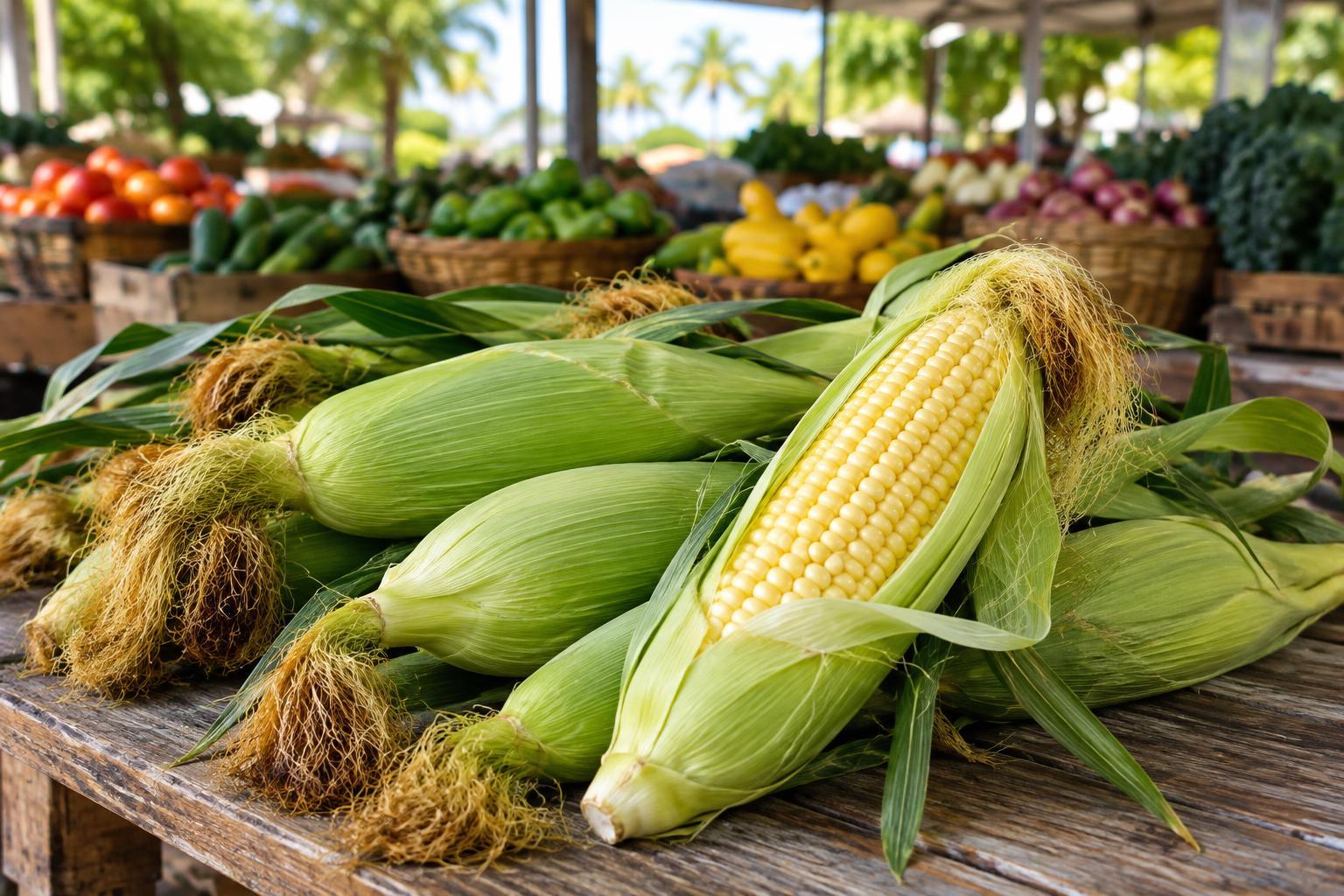
Look for husks that feel fresh and fit snugly around the ear. The stem end should not look very dry, and the ear should feel full from end to end. Silk that is slightly sticky or damp can be a good sign; darkened silk alone is not necessarily a problem. Avoid ears with obvious mold, soft spots or a sour smell.
Resist the temptation to strip back every husk. Peeling exposes kernels, makes the ear dry out faster and can leave unsold corn less appealing for the next shopper. If the vendor allows it, gently feel through the husk for well-filled rows or peel back only a small section at the tip. A few undeveloped kernels at the very tip are common and do not mean the rest of the ear is poor.
Choose a quantity you can eat soon, particularly if you will serve the corn simply on the cob. Ask the seller whether the variety is best suited to boiling, grilling or eating raw. Sweet corn can be delicious with little more than heat and salt, but different ears vary in tenderness, sweetness and kernel texture.
Keep it cool until you cook it
Refrigerate sweet corn as soon as you get home. Leave the husks on, place the ears in a loose or perforated bag, and keep them in the refrigerator rather than on the counter. The bag helps limit drying without sealing in too much moisture. Wait to shuck the corn until you are ready to prepare it.
For the sweetest flavor and juiciest texture, try to cook fresh ears within a day or two. Corn may remain usable longer if kept cold, but quality gradually declines. If the husks have dried or the kernels seem less plump, cut the kernels from the cob and use them in a sauté, soup or fritter rather than serving the ears whole. Discard corn that shows mold or smells off.
If your trip home will be long, an insulated bag can help keep the ears out of the heat. Do not leave corn in a parked car while running other errands. Cooling cannot restore sweetness that has already faded, but it can help preserve what was there when you bought it.
Freeze extra corn for later meals
When you have more corn than you can eat promptly, freezing is a practical option. Remove the husks and silk, briefly blanch the ears in boiling water, then cool them in ice water and drain well. Cut the kernels from the cobs if you want smaller packages that are easy to add to soups, rice dishes or skillet meals. You can also freeze whole ears if you have the space.
Pack the cooled corn in freezer-safe containers or bags, pressing out excess air, and label the packages so you can use the oldest ones first. Freezing will not give you the exact texture of a just-picked ear, but it lets you save a generous market purchase instead of watching it lose quality in the refrigerator. For a simple fresh meal before you freeze the rest, cook a few ears and finish them with butter, citrus and a pinch of salt.