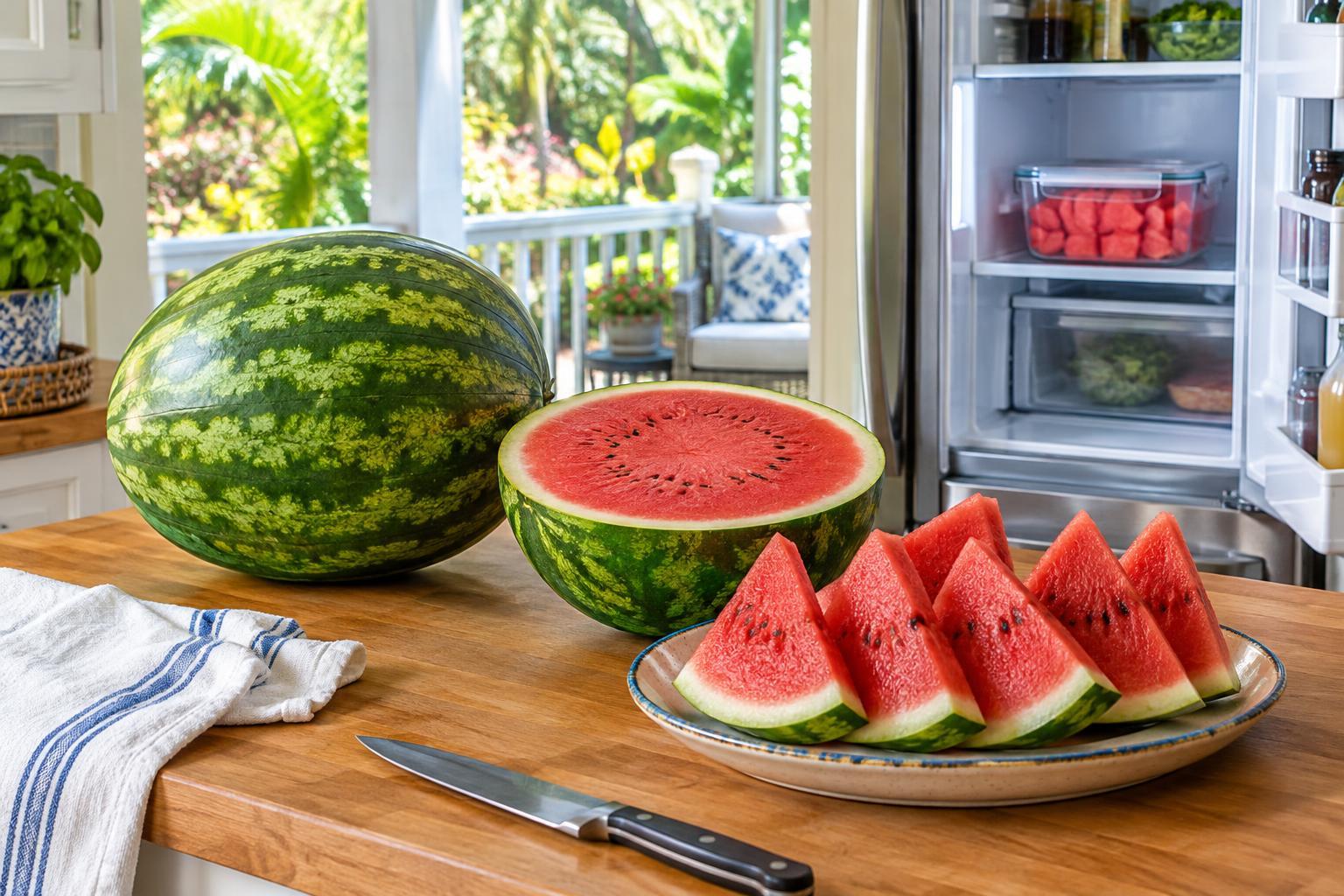
Plan for the trip home
Watermelon is a familiar sight at Florida markets during the warmer part of the year, though local harvest timing varies by area and growing conditions. Whether you buy one from a farm stand or a grocery display, start with a melon that feels heavy for its size and has a firm, intact rind. A creamy-colored patch where it rested on the ground is normal. Avoid one with deep cracks, soft spots, leaking juice, or visible mold.
Think about storage before choosing a large melon. Will it fit in your refrigerator once cut? If not, consider a smaller one or plan to share it soon after slicing. Keep the whole melon out of a hot car while you finish other errands. A shaded market stall is one thing; a closed vehicle can get much hotter. At home, set the melon somewhere clean rather than directly on a floor or a surface used for raw meat.
Store a whole melon with the kitchen in mind
An uncut watermelon can usually sit for a short time in a cool, dry indoor spot. Keep it out of direct sun and away from heat sources, and check it for softening or damage. If your kitchen stays especially warm, refrigeration is the better option when you have room. Chilling a whole melon also means it will be ready to serve, although a very large one may take time to cool through.
Whole-melon storage is partly a question of quality: its texture and flavor can change as it sits. Cut-melon storage is a food-safety question because the exposed flesh needs refrigeration. Do not assume that a thick rind will protect a melon indefinitely, especially one that was bruised or cracked before it reached your counter.
Wash the rind before the first slice
Even when you will not eat the rind, clean it before cutting. A knife can carry dirt or other contaminants from the outside into the flesh. Rinse the whole melon under running water, gently scrub the rind with a clean produce brush, and dry it with a clean towel. There is no need to use soap, detergent, or a produce wash.
Wash your hands, and use a clean knife and cutting board. If you have been preparing raw meat, poultry, or seafood, wash the tools and work surface thoroughly before bringing out the watermelon. Cut away and discard damaged areas; if a melon is badly cracked, leaking, moldy, or soft, it is simpler to choose another. Once you slice it, move the pieces to clean dishes or containers rather than returning them to an unwashed surface.
Refrigerate cut watermelon promptly
Put cut watermelon in the refrigerator within two hours of slicing. If the fruit is outside in temperatures above 90°F, shorten that window to one hour. Keep your refrigerator at 40°F or below. These limits apply to wedges with rind attached as well as cubes and slices: once the flesh is exposed, treat all of it as cut fruit.
Cover wedges or place smaller pieces in a clean, sealed container so they do not pick up odors or drips from other foods. For best quality, use refrigerated cut watermelon within a few days, ideally three to four. If you are unsure how long it has been sitting out, discard it rather than relying on its smell or appearance to judge safety. Chill only what you expect to use soon and leave the rest of the melon refrigerated.
Make warm-weather serving easier
For a beach day, park picnic, or backyard meal, start with cold watermelon and pack it in a cooler with plenty of ice or frozen packs. Keep the cooler closed when you can, and set out small portions at a time instead of one large platter. Use clean serving utensils, especially when people are sharing other picnic foods. Return uneaten pieces to the cooler promptly, provided they have stayed cold and have not been sitting out past the time limits.
At home, the same small-batch approach makes a big melon manageable. Slice enough for the table, refrigerate the remainder, and save cubes for a chilled snack or a simple fruit salad. A little planning lets the watermelon be the easy part of the meal—even on a hot Florida afternoon.