Why a summer crop can have a Florida winter season
Tomatoes are often associated with long summer days, but they do not need Florida’s hottest weather to thrive. Tomato plants grow best when warmth is balanced by manageable nights and enough time for flowers to set fruit. In much of Florida, that balance is easier to find during the cooler part of the year than in the peak of summer.
That does not mean every Florida tomato ripens in winter, or that the state has one uniform harvest calendar. Growing conditions change from north to south, and a coastal garden may behave differently from one inland. Variety, planting date, weather and growing method all affect when tomatoes arrive at a market. Still, the broader pattern can surprise visitors: a Florida-grown tomato may be most abundant when summer feels far away.
What heat, humidity and rain change
A tomato plant can look vigorous in warm weather yet produce little fruit. When temperatures remain high, especially overnight, flowers may not set fruit reliably. Existing fruit may also ripen differently in intense heat. A stretch of milder weather gives plants a better chance to turn flowers into tomatoes, provided they receive enough sun and water.
Florida’s wetter, more humid periods create other challenges. Frequent rain can leave soil waterlogged, split ripening fruit or encourage diseases that spread on damp leaves. Insects and other pests can also be harder to manage during warm, wet weather. These pressures do not make summer tomatoes impossible, but they help explain why many growers plan their main tomato crops around less punishing conditions.
A season that shifts across the state
In South Florida, mild winter conditions can support tomato growing while colder places are still at risk of freezing. Farther north, winter cold becomes a more important limit. Gardeners and small growers there may aim for fall or spring harvests rather than rely on the coldest weeks. Even within a region, a frost, heat spell or unusually wet period can shift what is ready to pick.
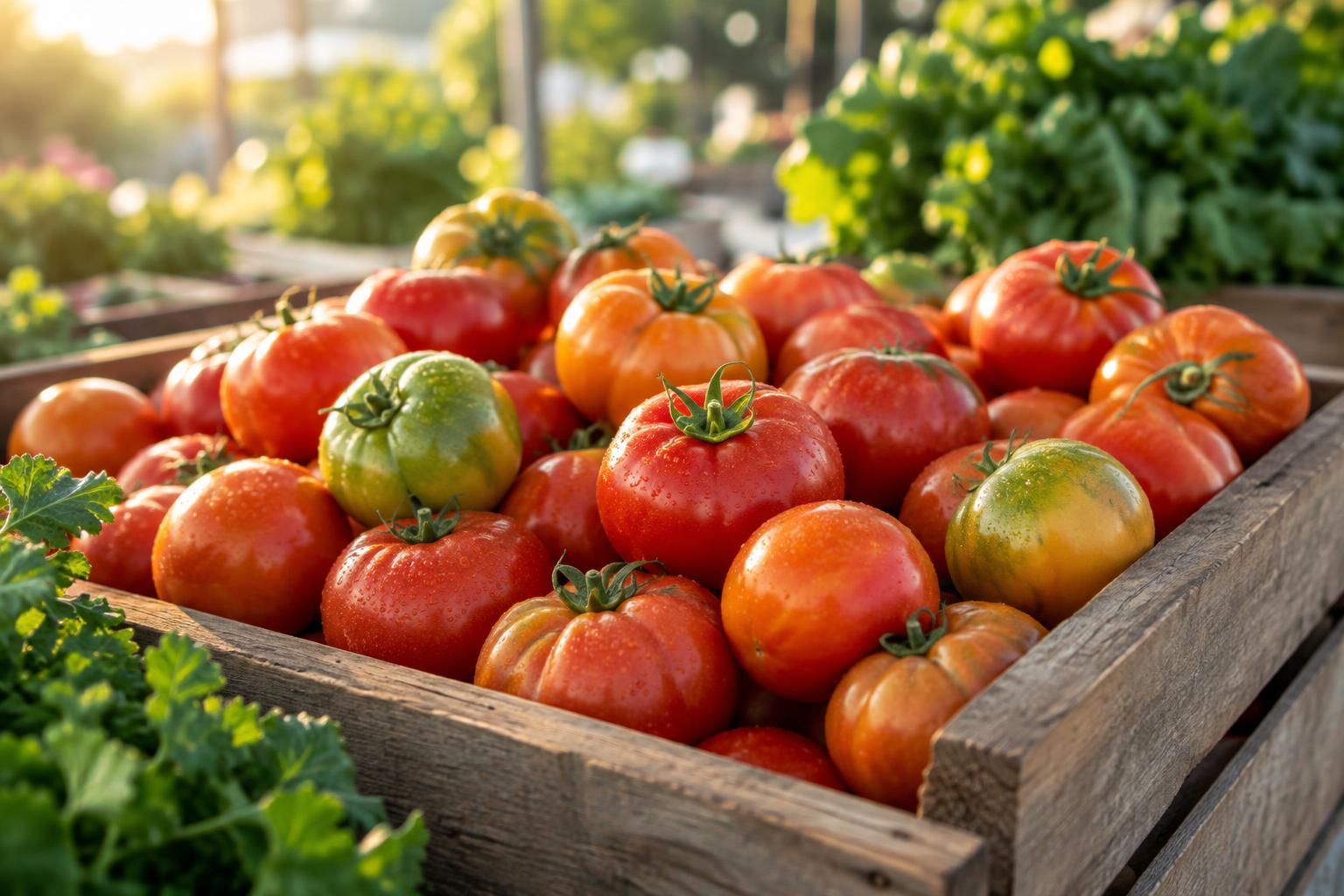
This variation is a good reason to treat a seasonal guide as a starting point, not a promise. At a market, ask a grower where the tomatoes were grown and when they were picked. A stall may offer tomatoes from another part of Florida, and an early or late harvest may reflect a particular variety or growing setup. The conversation often tells you more than a calendar alone.
How to choose tomatoes at the market
Look for tomatoes that feel substantial for their size and have sound skin. A few natural marks need not affect eating quality, but skip fruit with leaking spots, extensive soft areas or a sour smell. Color is useful, though it varies by variety: a ripe tomato might be red, yellow, orange or striped. For eating soon, choose fruit that yields slightly to gentle pressure. For later in the week, firmer tomatoes can finish ripening at home.
Ask what the grower recommends for your plans. A juicy slicing tomato is welcome in a sandwich, while smaller tomatoes can be convenient for salads or quick roasting. Shape alone does not tell you how a tomato will taste. If samples are available, flavor is the best guide; otherwise, buying a modest amount first lets you learn which varieties you enjoy.
Bring the harvest home without losing flavor
Keep tomatoes that still need to ripen at room temperature, out of harsh direct sun. Once ripe, use them promptly for the fullest fresh flavor. If you cannot eat them in time, refrigeration can help slow spoilage, although it may dull their texture and flavor. Let chilled tomatoes come closer to room temperature before serving.
The simplest preparation is often enough for a good local tomato: slice it, add a little salt and give the juices a moment to collect. Pair it with herbs, tuck it into a sandwich or spoon it over toast. When the market has plenty, cook extra tomatoes into a sauce or roast them to concentrate their flavor. Florida’s tomato season is less about following a single date and more about noticing when cooler weather, local growing conditions and ripe fruit come together.