Three greens for cooler-weather cooking
Cooler weather makes leafy greens especially appealing at Florida markets. Collards, mustard greens, and turnip greens can all become a comforting pot of greens, yet treating them as interchangeable misses some of their best qualities. Collards are sturdy and mild, mustard greens have a peppery edge, and turnip greens often land somewhere between earthy and pleasantly sharp.
Availability varies by grower, location, and weather, so let the market display guide your plans. A quick look at the leaves and a conversation with the seller can tell you more about the bunch in front of you than a rigid seasonal calendar.
How to tell them apart
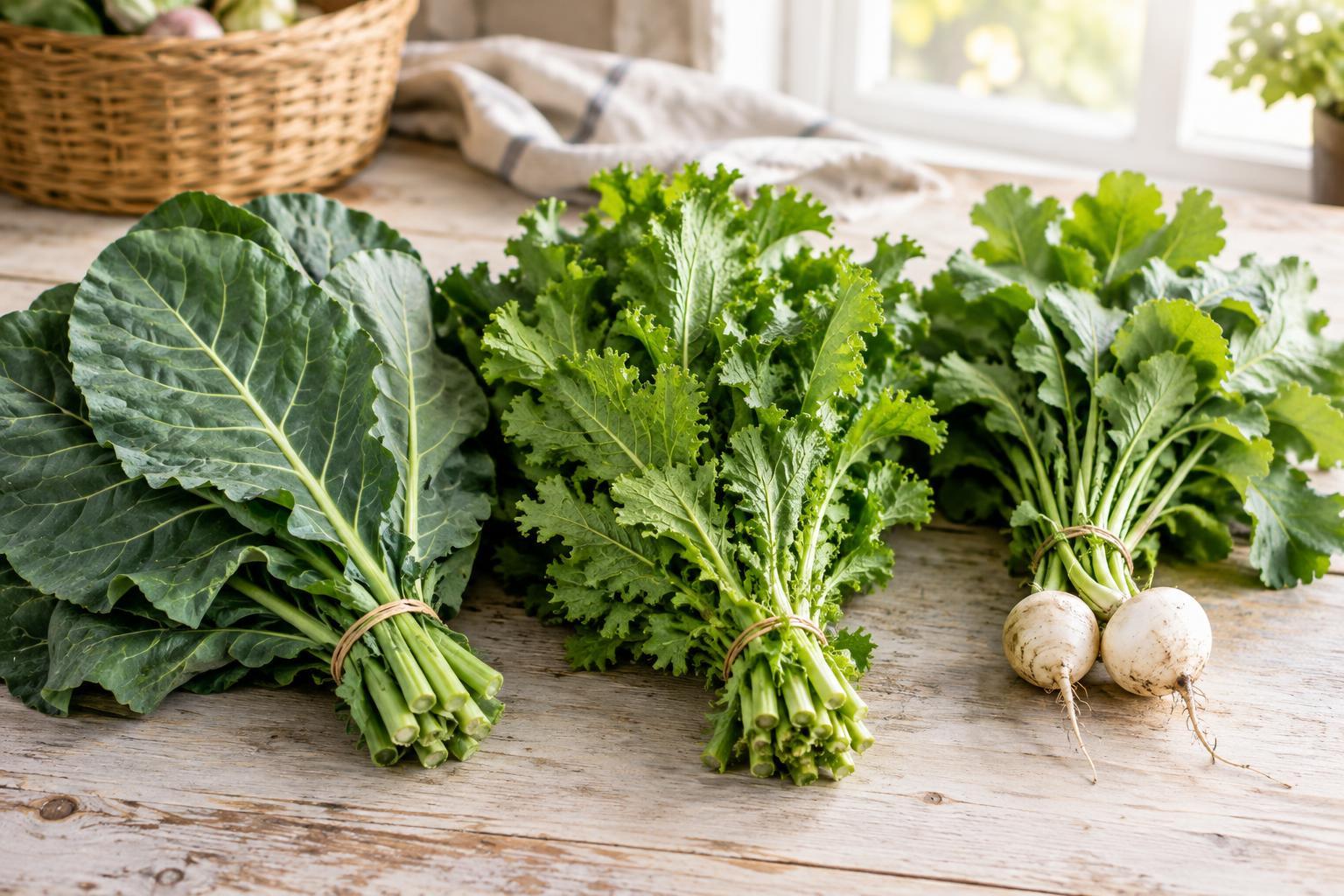
Collards have broad, relatively smooth leaves and thick central stems. Their substantial texture makes them well suited to slow simmering, though tender leaves can also be sliced thinly for a quicker sauté. Their flavor is gently cabbage-like, leaving room for garlic, onion, vinegar, and spices to come through.
Mustard greens may have flat, crinkled, or frilly leaves, depending on the variety. Taste a small raw piece, if the seller offers samples, and you may notice a peppery bite. Cooking usually softens that intensity without erasing it. Young mustard greens can enliven a mixed salad; larger leaves work well wilted in a skillet or simmered with other greens.
Turnip greens are the leaves of the turnip plant, though bunches of greens are not always sold with roots attached. Their leaves can feel more delicate than collards, while their flavor may be earthy, slightly bitter, or brisk. If a bunch comes with turnips, use both parts: cook the roots separately or add small pieces to the pot early enough to become tender.
Choosing and storing a good bunch
Look for leaves that appear lively rather than limp, with color typical of their variety. A few small holes or uneven edges need not rule out a bunch, but widespread yellowing, slimy spots, or a sour smell are reasons to choose another. Check the stems, too: thick collard stems are normal, while a freshly cut end should not look mushy.
Greens can carry grit, especially near the stems and in folded leaves. Before cooking, separate the leaves and swish them in a large bowl of cool water. Lift the leaves out rather than pouring the water over them, then repeat if grit remains at the bottom. Dry greens intended for sautéing so they do not splash excessively in hot oil.
If you are not cooking them right away, keep the leaves in the refrigerator, loosely wrapped in a towel or held in a bag that allows a little airflow. Wash just before use when possible. Greens vary in how long they keep, so check them regularly and cook tender or slightly wilted leaves first.
Match the cooking method to the leaf
For a long-simmered pot, collards are an easy starting point. Strip or cut away the toughest stems, stack and slice the leaves, then cook them gently with onion, garlic, broth or water, and seasonings. Give the leaves time to soften, tasting as you go rather than relying on a fixed cooking time. A splash of vinegar near the end can brighten the finished pot.
Mustard greens are a good choice when you want a livelier flavor with less time at the stove. Sauté sliced stems first if they are firm, then add the leaves in handfuls and cook until wilted and tender to your liking. Turnip greens can be prepared much the same way; larger or tougher leaves may benefit from a covered simmer with a little liquid. Mixing all three creates contrast: collards provide body, mustard adds bite, and turnip greens contribute earthy depth.
Make the most of what you bring home
Greens are flexible partners for familiar Florida-market ingredients. Stir sautéed mustard or turnip greens into beans, spoon slow-cooked collards alongside cornbread, or fold chopped cooked greens into a rice dish. Citrus juice offers a bright finish, while a small amount of pepper sauce adds heat without hiding the leaves' character.
Start by buying one bunch of each green you are curious about, rather than enough for a large pot. Cook them simply, taste them separately, and notice which texture and level of bite you prefer. The best choice is not always the mildest or the quickest to cook; it is the one that suits the meal you want to make.