A waterfront community built around sponges
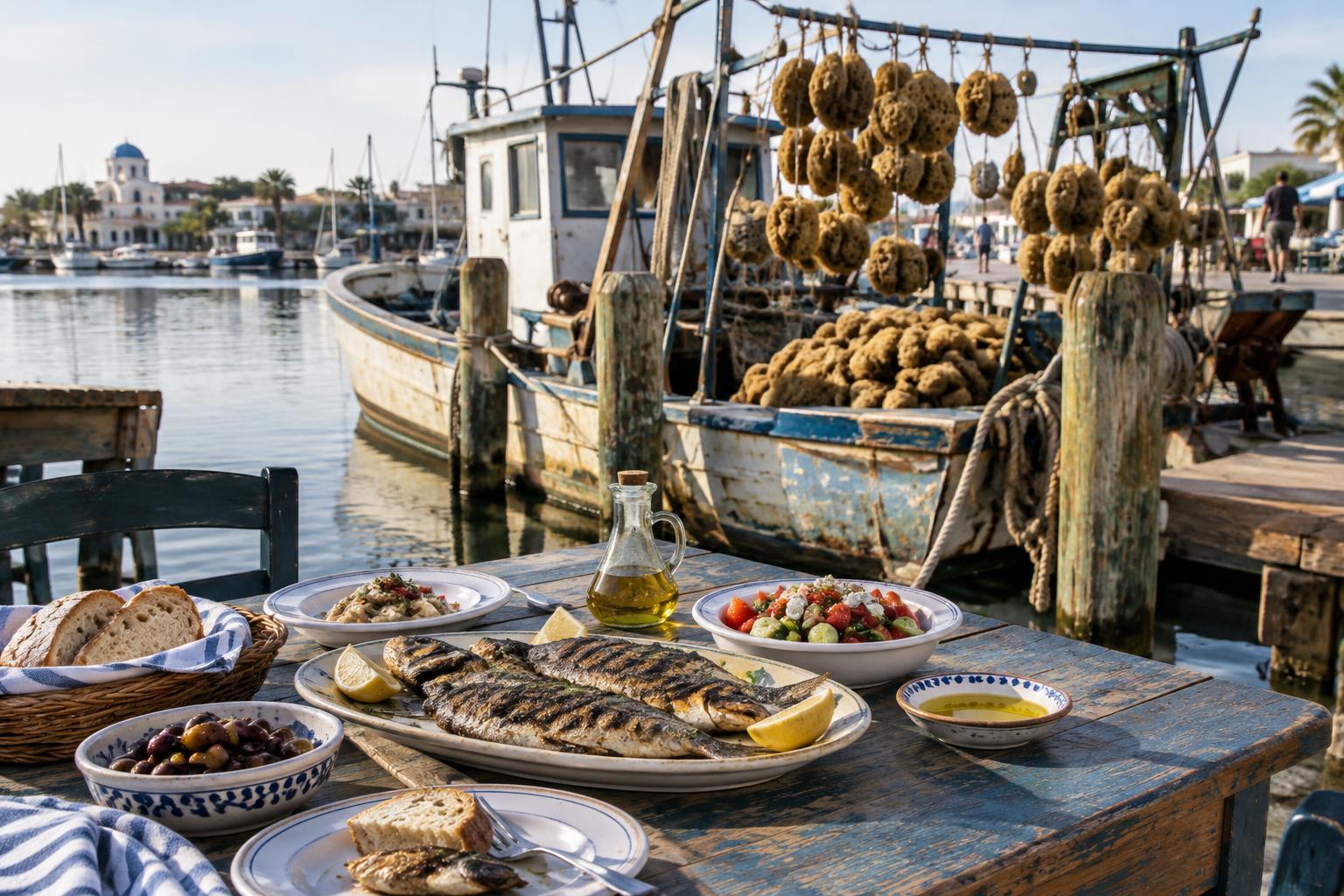
Tarpon Springs, on Florida’s Gulf Coast, is closely associated with sponge diving and the Greek immigrants who helped develop the trade. Divers, boat crews, merchants and their families made lives around the waterfront. Their presence also shaped the city beyond the docks: language, faith, family gatherings and cooking became part of everyday life.
That history offers a useful way to approach the city’s food. Greek dishes in Tarpon Springs are not simply a decorative nod to the sponge boats. They reflect a community that settled, raised families and passed recipes along. At the same time, a restaurant meal cannot tell the whole story of dangerous work at sea or the many people who have called the area home. Food is one entry point into a larger local history.
Why the table became a meeting place
In a community tied to work on the water, meals could bring people back together on land. Home cooking, cafés, bakeries and restaurants all offered places to share familiar flavors and keep traditions recognizable across generations. Recipes might be repeated closely, adjusted to suit available ingredients or changed to fit a household’s tastes. That flexibility is part of how food traditions endure.
Many dishes associated with Greek cooking are suited to a shared table: spreads with bread, vegetables dressed with olive oil and lemon, filled pastries and grilled foods. In Tarpon Springs, those flavors can feel connected to the waterfront setting, but it is worth resisting an easy assumption that every dish was once a diver’s meal. A bakery pastry or a bowl of soup may speak more to family life and community gathering than to what was carried aboard a boat.
Greek flavors meet Gulf Coast ingredients
Seafood makes the connection between place and plate especially visible. Greek approaches such as grilling fish, adding lemon and herbs, or serving small seafood dishes can sit comfortably beside Gulf Coast ingredients. The result is not one fixed style of Tarpon Springs cooking. It depends on the cook, the season, the catch and what a kitchen can obtain. A menu described as Greek does not necessarily use locally caught seafood, so ask if that distinction matters to you.
The same give-and-take extends beyond fish. Tomatoes, greens, peppers and citrus can find their way into meals shaped by Greek cooking traditions, while familiar dishes such as spanakopita, dolmades and avgolemono offer other kinds of comfort. Some ingredients may come from farther away, and families may prepare the same dish differently. Rather than looking for a single “authentic” version, notice how cooks balance a remembered flavor with what is practical and appealing where they live.
How to explore the food with curiosity
When visiting Tarpon Springs, leave room to look beyond a single signature dish. A bakery counter, a simple lunch and a seafood dinner can each reveal something different about the food culture. Ask what a dish contains, whether seafood is local if that interests you, and whether a recipe is a house specialty. These questions are more useful than assuming every Greek-named item has the same history or preparation.
The sponge-diving heritage also invites a slower look at the waterfront. Boats and sponges help explain why Greek families came to build a community here, while the food shows how community life continued on shore. Enjoy the pastries and lemony plates, but remember the people and work behind the setting. That combination—working history, family tradition and an adaptable local table—is what makes Tarpon Springs’ food culture distinctive.