A meal built around the claw
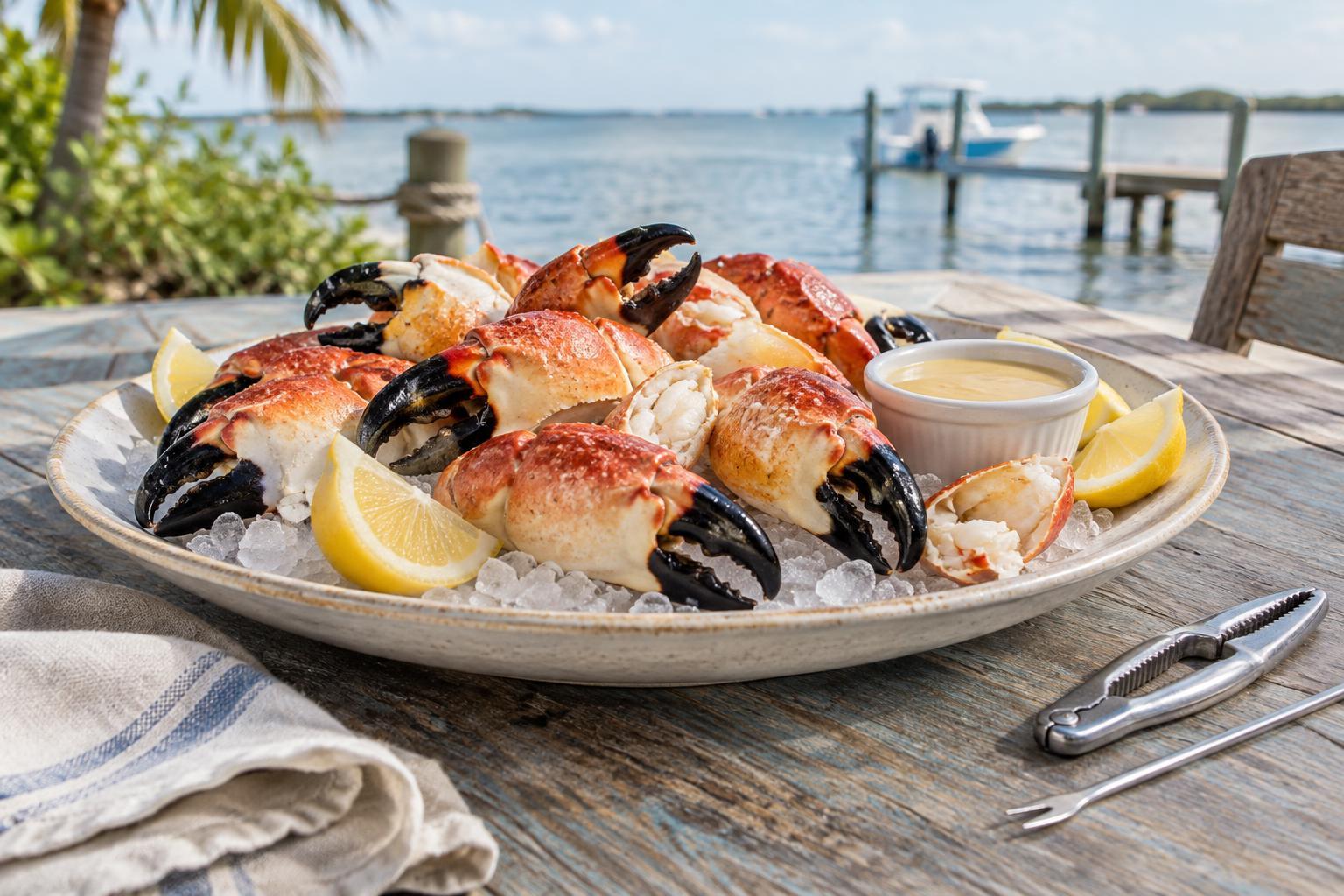
Stone crab is a Florida dining tradition with an unusual centerpiece. Rather than receiving a whole crab to pick apart, diners are served the claws: thick pieces of shell surrounding firm, sweet meat. A plate may look simple, with claws, a dipping sauce and a few sides, but eating it is a hands-on occasion. Cracking each shell and easing out the meat is part of the pleasure.
The claws suit both a casual table and a celebratory meal. They can be shared as a starter or ordered as the main event, where their mild flavor gets room to stand on its own. For someone trying them for the first time, the best approach is to slow down. Stone crab is less about a complicated preparation than about enjoying the meat and the small ritual of getting to it.
Why the claws matter
The claw is not simply the most convenient part to serve; it is the focus of the stone crab fishery. Harvesters remove eligible claws and return the crab to the water rather than keeping the whole animal. Stone crabs can regrow a lost claw, a trait that makes this approach possible. That does not mean every released crab survives or quickly replaces its claw. Survival depends in part on careful handling and proper removal, which is why harvest rules and practices matter.
Claws also explain the distinctive look of the dish. The shell protects a generous piece of meat, but its hard surface calls for a cracker, mallet or a kitchen tool designed for the job. Restaurants often serve claws pre-cracked, making it easier to open them without crushing the meat. At a seafood counter, a shopper may find claws in different size grades; larger claws generally offer bigger portions, while smaller ones can be just as enjoyable.
If you are buying claws to prepare at home, ask whether they have been cooked and whether they are ready to serve. Stone crab claws are commonly sold cooked and chilled. Treat them as a perishable seafood purchase: keep them cold, follow the seller’s storage guidance and plan to eat them promptly.
The familiar plate: chilled claws and mustard sauce
A classic way to serve stone crab claws is chilled, with a mustard-based dipping sauce. The sauce is often creamy and tangy, giving the sweet meat a sharp contrast without requiring a heavy coating. Lemon is another easy companion. Some diners prefer a squeeze over the meat; others taste the first bite plain before adding anything.
There is no need to make the sauce the main attraction. Set out a small bowl for dipping and let each person decide how much to use. Melted butter is another familiar seafood accompaniment, particularly if the claws are served warm. Either way, restrained seasoning leaves the crab’s flavor in focus. Simple sides such as a crisp salad, bread or vegetables can make the plate feel complete without competing with it.
How to eat stone crab without rushing
If the claws are pre-cracked, start by separating the shell at the breaks and pulling out the meat in pieces. If they are intact, place one on a stable surface and tap the shell gently with a mallet, or use a crab cracker. Aim to fracture the shell rather than smash it: lighter taps help keep small shell fragments out of the meat. A small seafood fork can reach pieces tucked near a joint.
Keep a spare plate or bowl nearby for discarded shells and a napkin within reach. Before dipping, check each piece of meat for shell. A little patience usually makes for a more satisfying bite than trying to force the claw open at once. If you are sharing an order, cracking a few claws at a time also keeps the meal sociable and the plate manageable.
Shopping with the tradition in mind
When ordering at a restaurant or buying from a seafood counter, it is reasonable to ask where the claws came from, what size is offered and how they have been handled. Availability and prices can vary, so check before planning a meal around them. If you are interested in the harvest practice, ask the seller what they know about sourcing rather than assuming that the ability to regrow a claw guarantees a low-impact catch.
Stone crab’s place in Florida food culture comes from more than a dipping sauce or a particular dining room. The dish connects a regional seafood harvest to a deliberate way of eating: choose a good claw, open it carefully and give its sweet meat your attention. Understanding why the claw is served makes that familiar plate a little more meaningful.