A coastal fish with a place at the table
Mullet is part of everyday coastal food culture in Florida. It is a fish people may encounter close to shore, and it has long been valued as a practical catch to cook and share. Along the Gulf Coast in particular, smoking mullet became a familiar way to turn that catch into food with a distinctive flavor and a little more keeping power. The result is not merely an ingredient for a recipe. For many families and communities, it is a taste associated with fishing, gathering and passing food around a table.
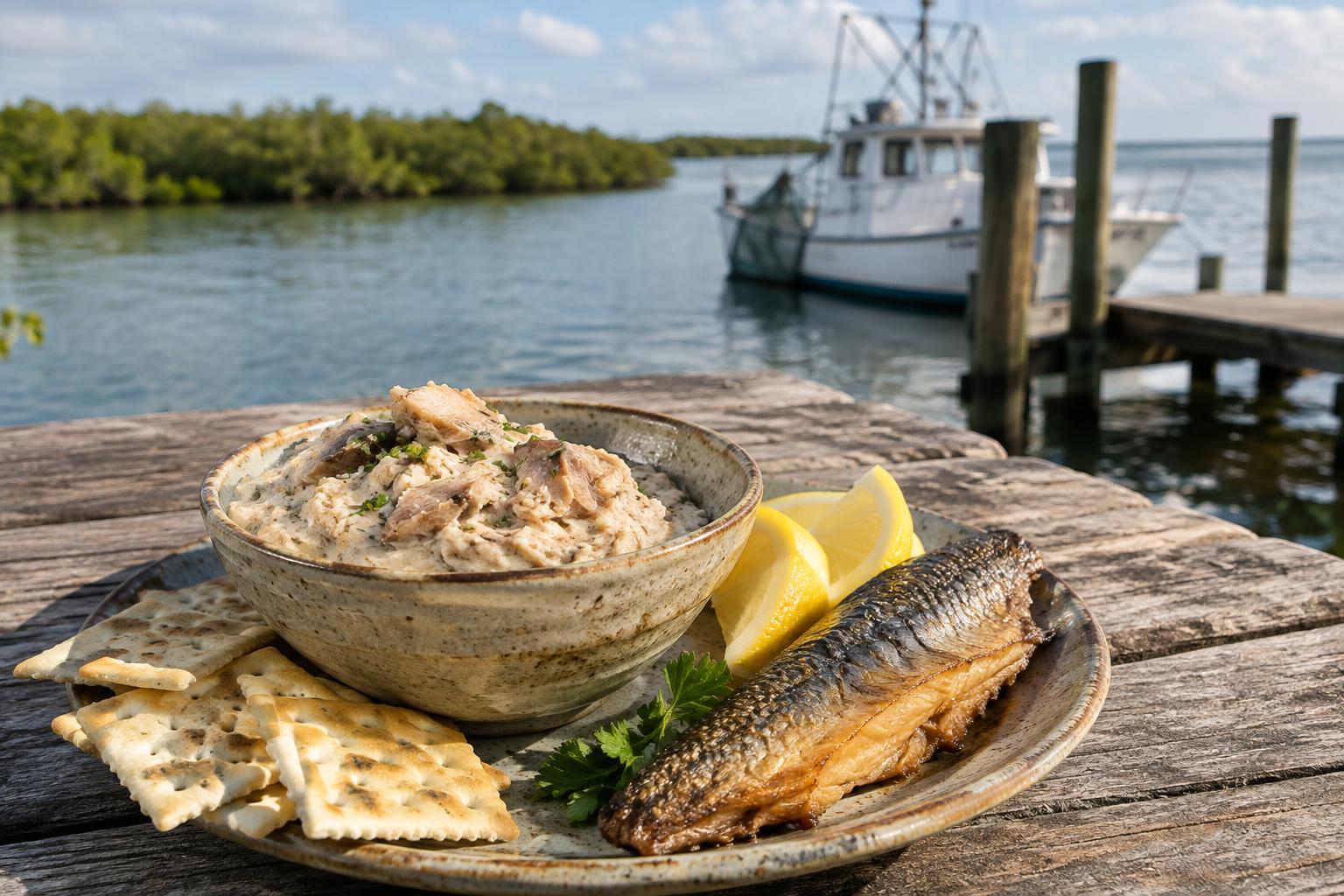
Smoked mullet is often served simply: a piece of fish, something crisp to eat alongside it, and perhaps a squeeze of citrus. Its rich flesh stands up well to smoke, while the skin helps hold the fish together during cooking. Methods and seasonings vary from one cook to another, so there is no single flavor that represents every Florida smokehouse or home kitchen.
Why smoked mullet tastes the way it does
Good smoked mullet has more going on than smoke alone. The fish has a pronounced flavor and enough richness to remain satisfying after cooking. Salt helps season the flesh; smoke adds aroma and a savory edge. Depending on the preparation, a piece may be gently smoky and moist or firmer with a more assertive flavor. Those differences matter when deciding how to eat it: a strongly smoked piece may need little more than plain crackers, while a milder one can take well to herbs or pepper.
When buying smoked mullet, look for fish that appears well handled and ask how it has been stored. Smoked fish is not automatically shelf-stable. Keep it refrigerated as directed by the seller or package, and use it within the recommended time. If you plan to make spread, buy enough to allow for skin and bones as well as the portions you will taste while preparing it.
How fish spread carries the tradition forward
Fish spread turns smoked mullet into a dish that is easy to share. The basic idea is straightforward: flake the fish, check carefully for bones, and fold it into a creamy base. Cream cheese is a common choice, sometimes loosened with a little mayonnaise or sour cream. Lemon juice brings brightness; black pepper, hot sauce or finely chopped onion can add contrast. The fish should still be the main flavor, not disappear beneath the additions.
For a simple version, start with a small amount of softened cream cheese and add flaked, chilled smoked mullet until the mixture tastes distinctly of fish. Stir in lemon juice a little at a time, then season to taste. Keep some flakes relatively large if you like a spread with texture. Because smoked fish may already be salty, taste before adding any salt. Chill the finished spread promptly and serve it cold.
Serving it without fuss
Smoked mullet spread fits naturally into an informal Florida-style snack board. Put out sturdy crackers or toasted bread, along with cucumber slices, celery or another crisp vegetable. Citrus wedges let people adjust each bite. Pickles can offer a sharp counterpoint, though it is worth keeping the accompaniments restrained so the fish remains the focus.
The spread also makes a good sandwich filling with lettuce and tomato or a topping for a simple lunch plate. If you are serving a group, set out a modest portion and replenish it from the refrigerator rather than leaving the whole batch at room temperature. Use clean utensils, and follow the storage guidance for the smoked fish you purchased.
Making room for local variations
Part of the appeal of smoked mullet is that it resists a fixed recipe. One cook may prefer coarse flakes with little binding; another may make a smooth, tangy spread. Some use heat, while others rely on smoke, lemon and pepper. Trying it plain before mixing anything in is the best way to decide what a particular piece needs.
At a seafood counter or market, a conversation about how the fish was prepared can be as useful as a recipe. Ask whether it is ready to eat, how to store it and which parts need removing before serving. Then begin simply. Smoked mullet’s connection to Florida’s coast comes through most clearly when its own flavor has room to speak.