Start with your eyes, not your hands
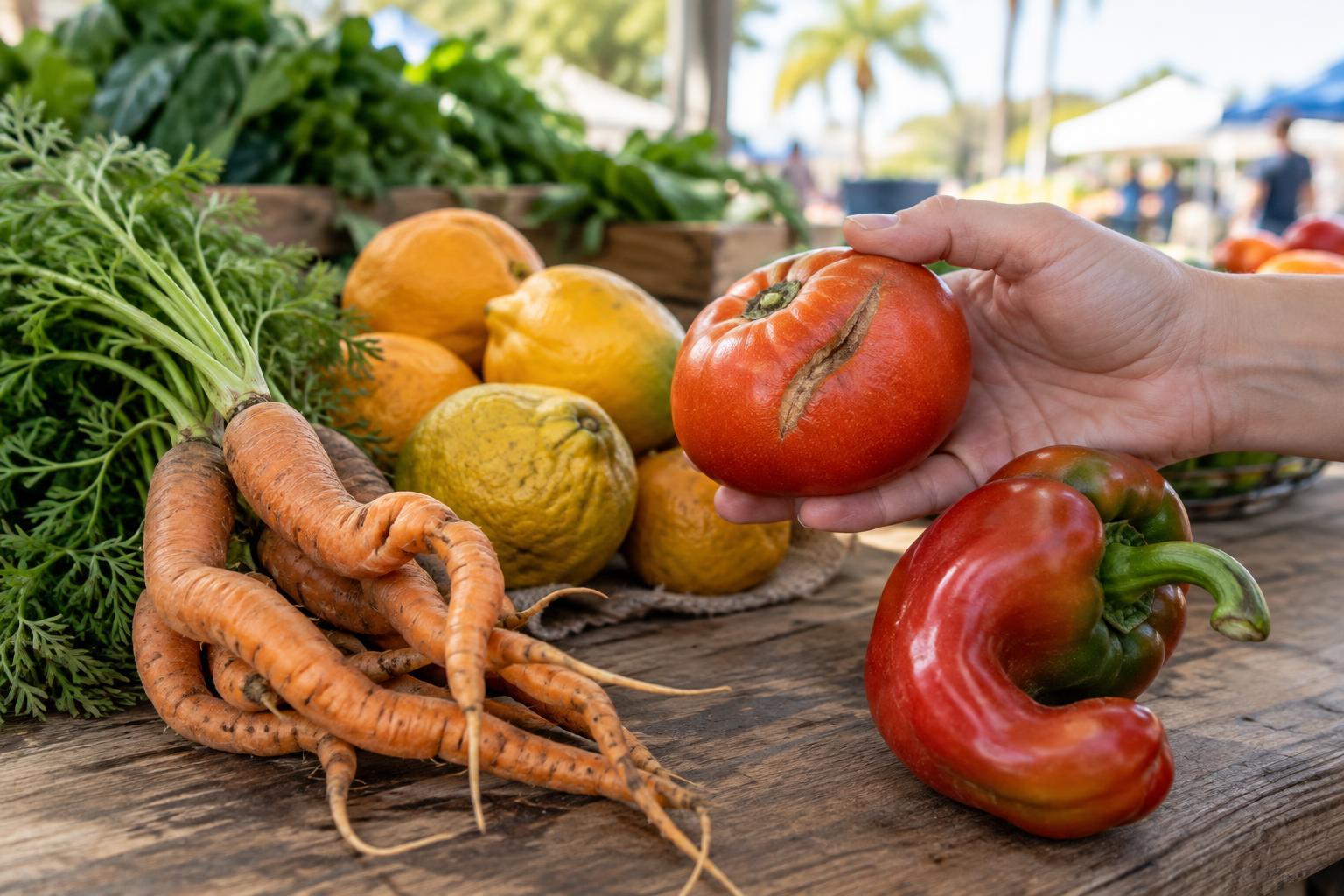
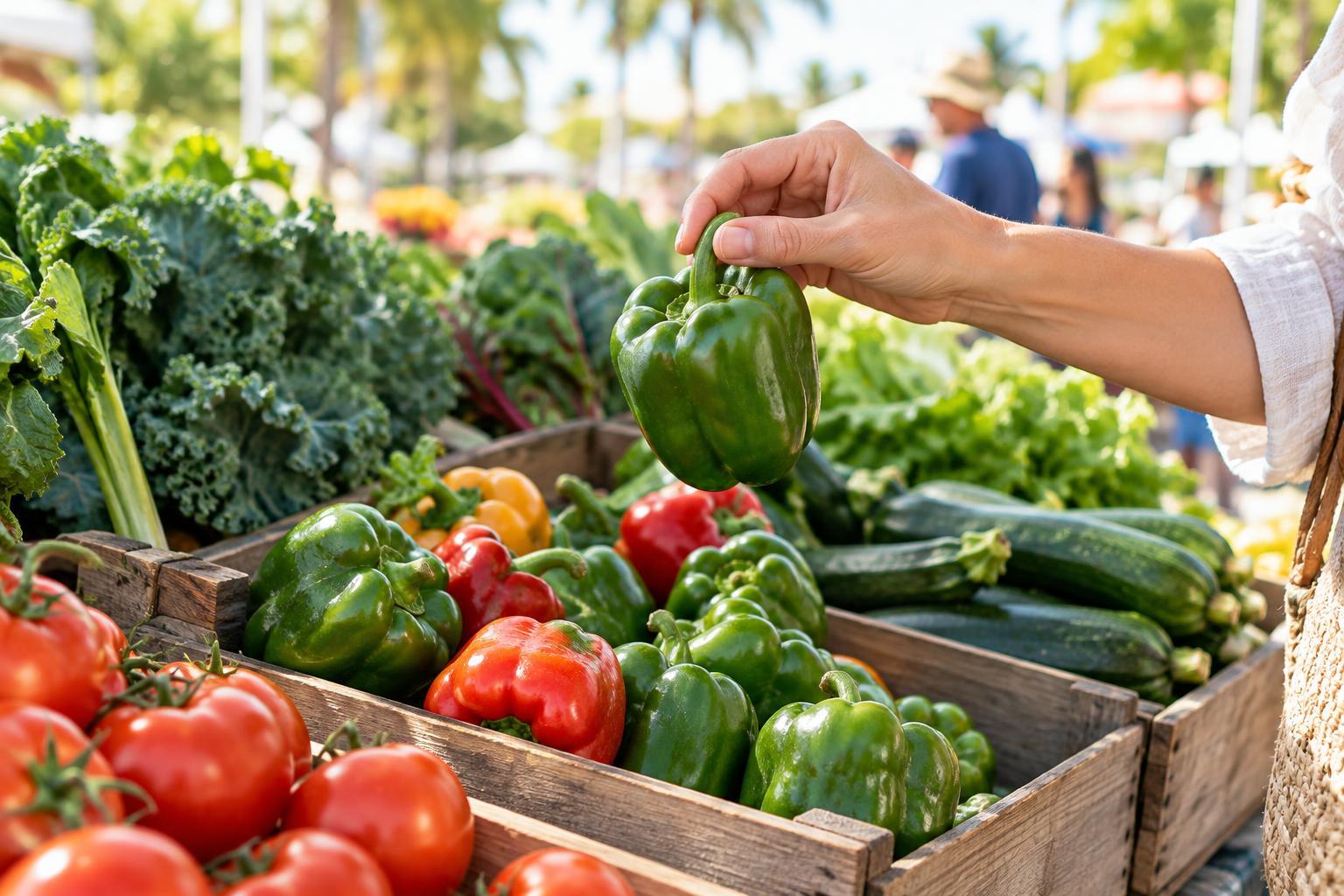
At a busy Florida market, a vegetable display can be tempting to sort through. But freshness checks need not leave dents, broken stems or scattered piles behind. First, look at the vegetables where they sit. Notice whether greens stand up or droop, whether cut stems look moist or dried out, and whether any pieces have soft spots, mold or leaking areas. A little soil, an unusual shape or a small surface mark is not necessarily a problem; damage that seems to be spreading is more useful to notice.
Look across the display rather than judging one vegetable in isolation. Are most items in a bunch similarly crisp? Are the vegetables shaded, or do the tender leaves look tired from sitting in the sun? Displays can change over the course of a market day, and some sturdy crops naturally look less delicate than greens. Use what you see as a reason to take a closer look, not as a rigid pass-or-fail test.
Lift gently and check what the display hides
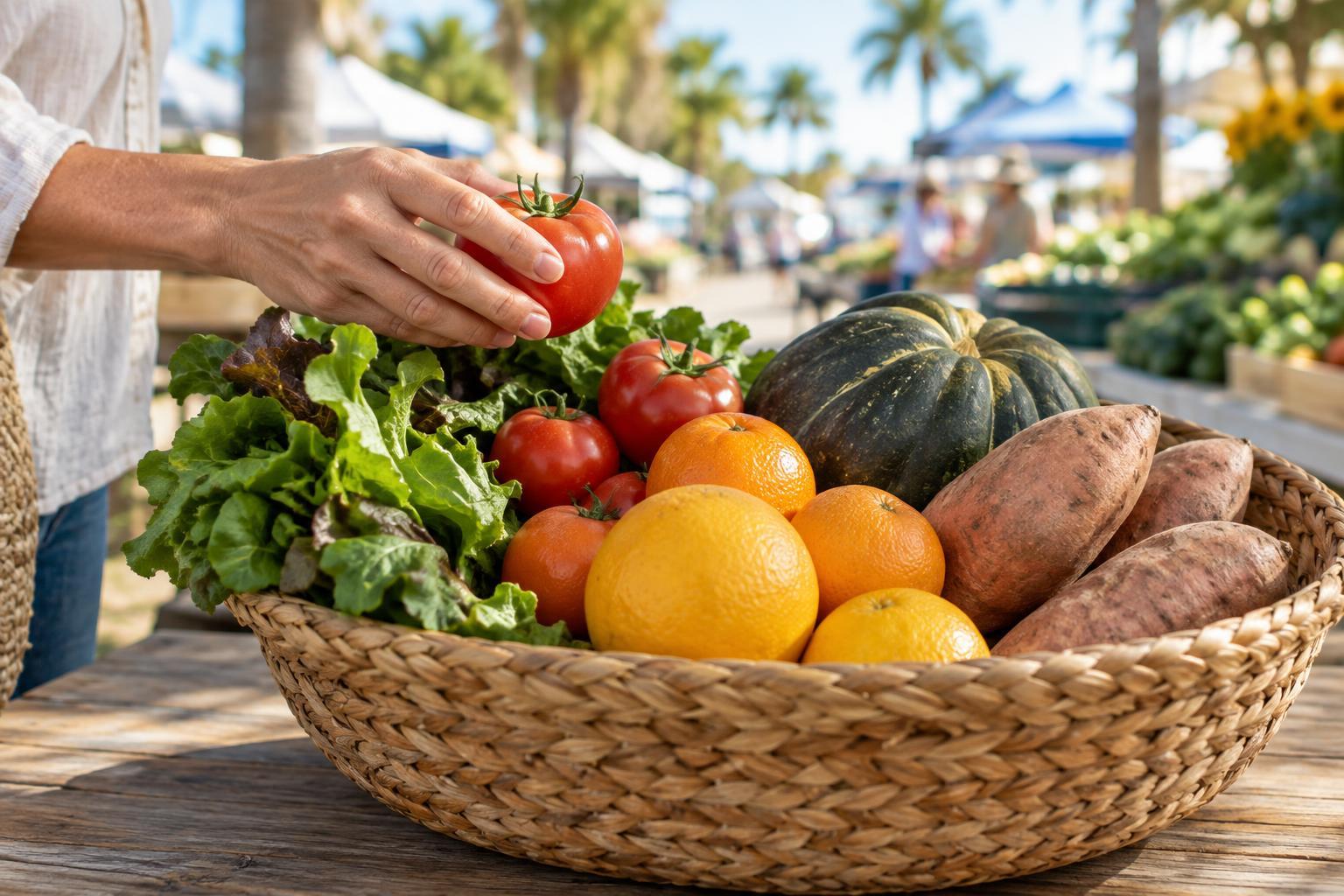
When you need to examine an item, pick it up with a relaxed, open hand and support its weight. Turn it once to see the underside, then set it down carefully if you do not choose it. Avoid digging to the bottom of a stacked display unless the seller invites you to. A quick look at the underside can reveal a bruise or damp patch that was not visible from above, while repeated handling can create the very damage shoppers are trying to avoid.
Weight can offer a clue without any squeezing. A cucumber or pepper that feels substantial for its size may be a better choice than one that feels light and looks wrinkled. Compare similar items rather than different varieties. For firm vegetables, you can also notice whether the surface looks sound and whether the item holds its shape in your hand. Pressing a thumb into a tomato, eggplant or squash is unnecessary: it may leave a mark without telling you much about how the inside will eat.
Match the check to the vegetable
For leafy greens and herbs, look for lively leaves and stems that are not slimy. Slight wilting may be manageable if you plan to use the bunch soon, but wet, decaying leaves tucked inside are a reason to choose another. Handle a bunch by its band or stems when possible, and gently part the outer leaves only as much as needed. Pulling off leaves to inspect the center damages produce the seller still has to offer.
For peppers, cucumbers and summer squash, favor smooth, intact skin and an overall firm appearance; check for sunken or wet spots without pressing on them. With tomatoes, color depends on the variety and how soon you plan to use them, so ask the seller which are ready for today and which can wait. For carrots, radishes and other roots, look for sound surfaces and avoid mistaking a harmless irregular shape for poor quality. If the tops are attached, their condition may offer a clue, but tops can also lose vigor before the root does.
Onions, garlic and winter squash call for a different eye. Their outer surfaces are meant to be dry, so moisture or soft-looking areas deserve attention. A papery onion skin is normal; a visibly damaged neck or leaking spot is not. You do not need to peel back layers, snap stems or scratch a squash to check it.
Let the seller fill in what you cannot see
A short question can be more useful than extra handling. Try asking, “Which of these would you use tonight?” or “Which will keep a few days?” If a pile contains vegetables at different stages of ripeness, a seller can help you choose for your plans. They may also know whether a mark came from handling or is typical of that variety. Ask before opening a bag, separating a bunch or moving produce from a carefully arranged display.
If the seller offers samples, follow their lead; otherwise, do not taste or break open vegetables to test them. The goal is to leave the stall as welcoming for the next shopper as you found it. Choosing a slightly imperfect vegetable you will actually cook can be more satisfying than searching for a flawless one that does not fit your meal.
Shop for the meal you have in mind
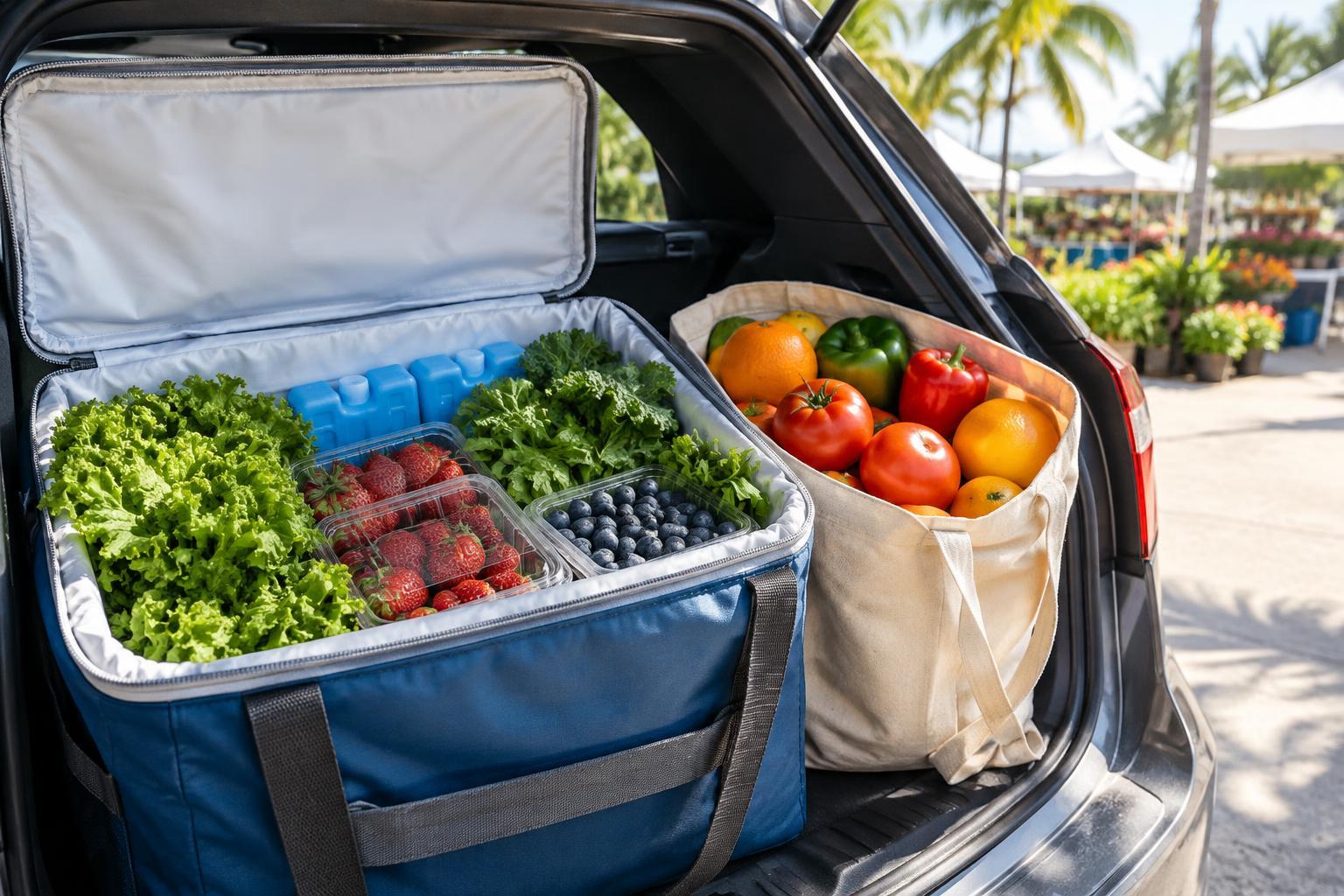
Freshness is not always the same as maximum firmness. A ripe tomato for a sandwich and a tomato intended for later in the week may call for different choices. Tender greens deserve a prompt trip home, while sturdy roots may be more forgiving. Before buying, think about when you will cook each item and whether you can protect delicate vegetables from heavier purchases in your bag.
The simplest market habit is also the gentlest: look first, lift only what you are considering, and ask when you are unsure. You will make a better choice for your kitchen without turning the display into a collection of bruised leftovers.