Start with the amount you will use
Farmers market prices can look straightforward until the same ingredient appears in different units. One vendor sells tomatoes by the pound, another offers a filled basket, and a third has a special on several baskets. The lowest number on a sign is not necessarily the lowest cost for your meal. Before comparing prices, decide roughly how much you need and when you can use it.
Think in portions rather than packages. A small basket may be ideal for tonight’s salad even if a larger basket costs less per pound. If extra produce is likely to spoil, the larger purchase is not a bargain for your household. On the other hand, buying more may make sense when you already have a plan to cook, share, or preserve it. Quality matters, too: ripe fruit ready to eat today serves a different purpose from fruit you hope to keep for several days.
Turn pounds and baskets into a common unit
When produce is sold by weight, comparison is easiest. For a package marked with both a price and a weight, divide the price by the number of pounds. A $3 bag weighing 12 ounces contains three-quarters of a pound, so its price works out to $4 per pound. Compare that figure with another vendor’s posted price per pound, then consider differences in variety, ripeness, and condition.
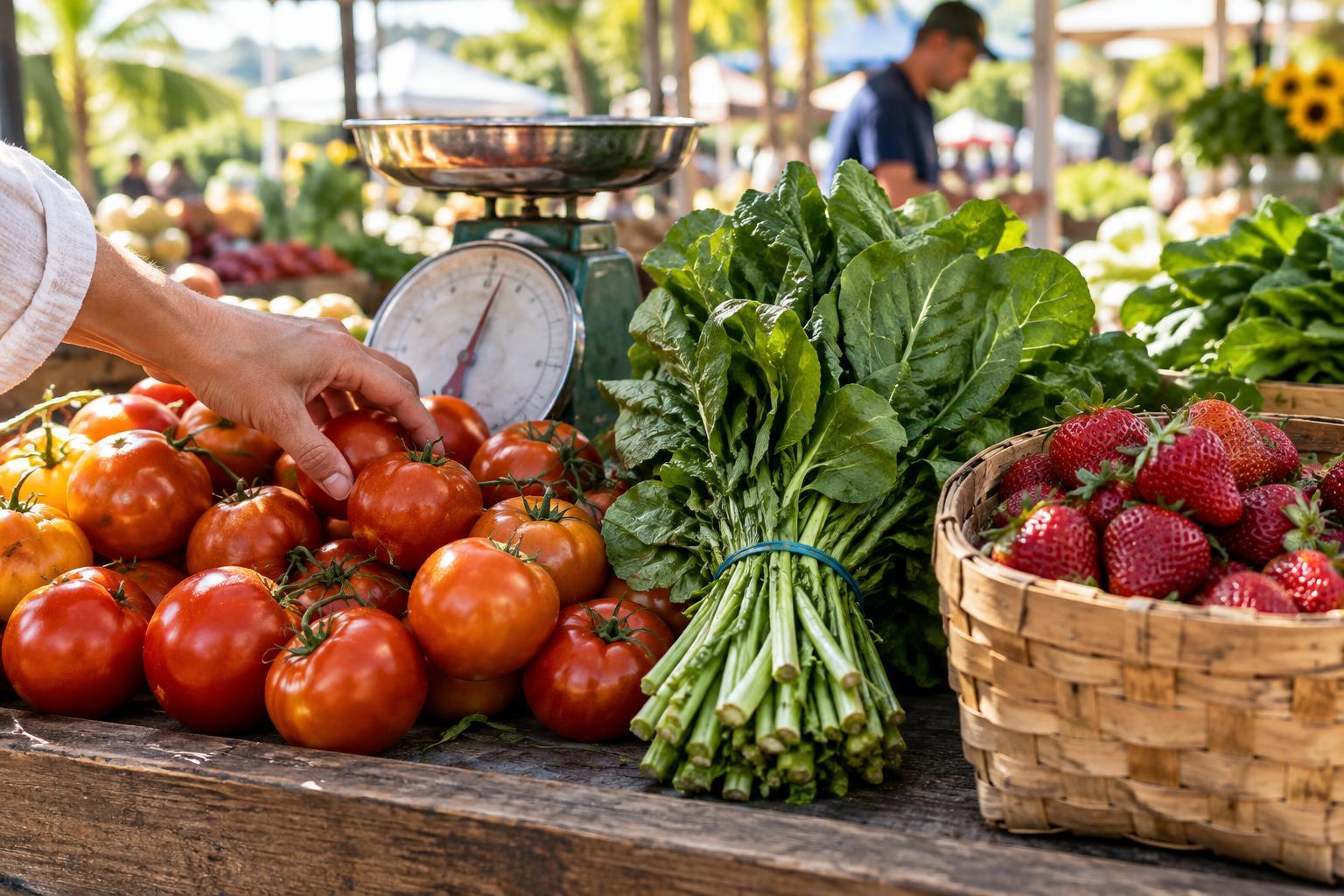
A basket is a container size, not a fixed weight. How much it holds depends on the container, the produce, and how it is filled. If a vendor knows the approximate weight, you can make a quick estimate: an $8 basket holding about 2½ pounds works out to about $3.20 per pound. Treat that as an estimate rather than an exact measurement. If weight matters to your decision, politely ask whether the basket can be weighed and follow the vendor’s preference about handling produce or using a scale.
You do not always need to calculate to the penny. If two baskets look similar, compare their fullness and the condition of what is underneath the top layer. Ask whether they contain one variety or a mix, especially if you need produce with a particular texture or ripeness for a recipe.
Compare bunches by usable portions
Bunched produce takes a little more judgment. A bunch of herbs, greens, radishes, or green onions may have more stems, leaves, or roots than another bunch with the same price. Look at the size of the bunch and at the parts you intend to eat. If you need two cups of chopped leaves, a generous bunch with tender leaves may be more useful than a larger-looking bunch made up mostly of thick stems.
Usable yield also depends on your kitchen habits. Radish greens can go into a cooked dish if they are in good condition, while herb stems may flavor a broth or sauce. Those possibilities add value only if you will actually use them. Rather than stripping or rearranging a bunch at the stall, ask the vendor what is included and whether bunch sizes are fairly consistent. You can also buy one bunch first, note how much it yields at home, and use that experience on your next visit.
Make a fair comparison without slowing down the stall
A quick market routine keeps the math manageable. Read each sign closely to confirm whether the price is per pound, per item, per bunch, or per basket. For a packaged amount, convert to a per-pound price if that helps. For a bunch, estimate how many meals it will cover. Then check freshness and choose the amount you can use. Keeping a short shopping list helps you compare purchases against your cooking plans rather than against the biggest display.
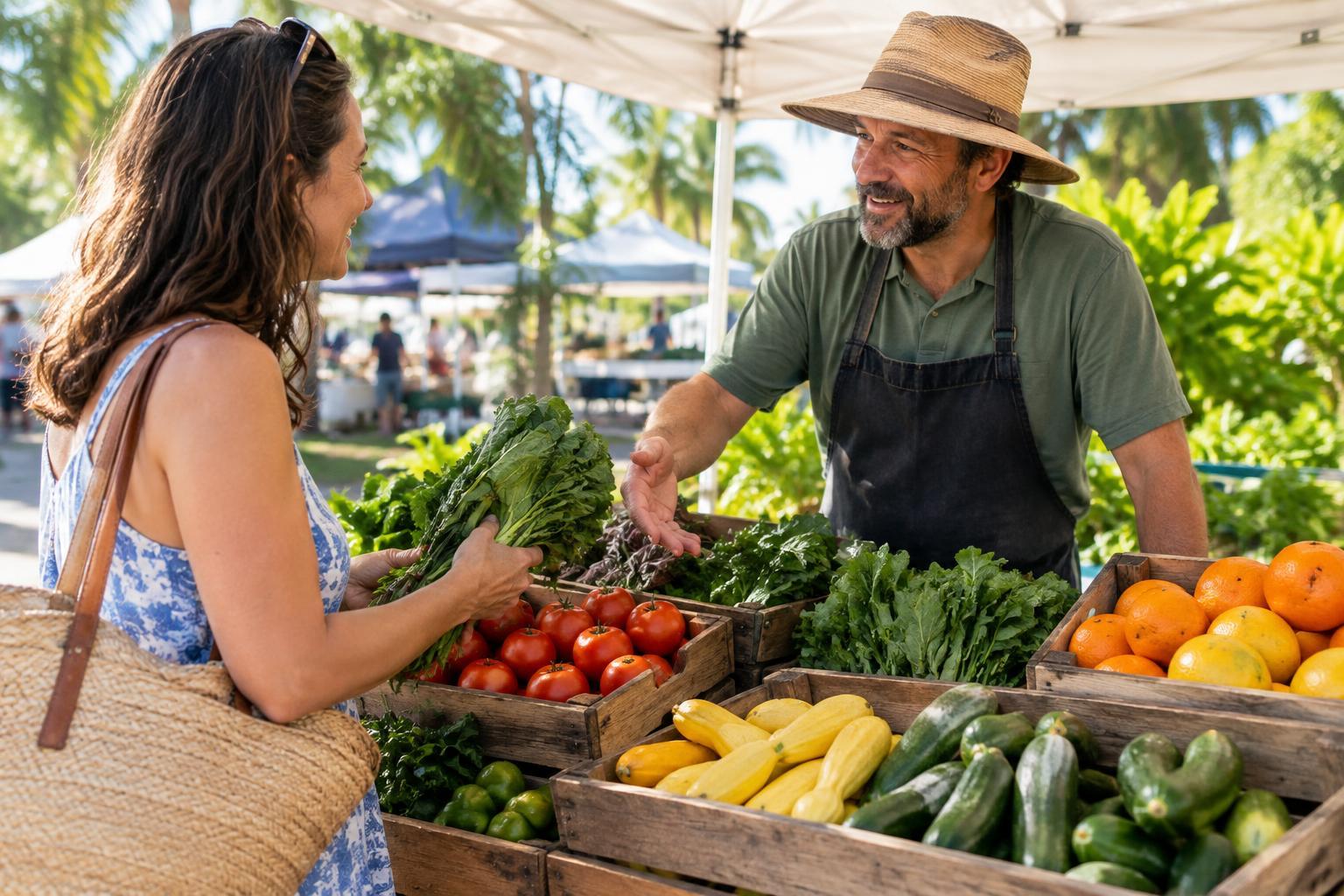
It is reasonable to ask, “About how much does this basket weigh?” or “Are these bunches about the same size?” Keep the question brief when a line is forming, and ask before picking up delicate items. Vendors may price produce to reflect variety, growing effort, sorting, or convenience, so a price difference does not automatically mean one stall is a better value.
In Florida’s warm weather, consider the trip home as part of the purchase. Tender greens and ripe berries benefit from getting out of the heat promptly. The best market value is produce you enjoy at its best—not simply the lowest calculated price per pound.