Choose a pepper and a planting window
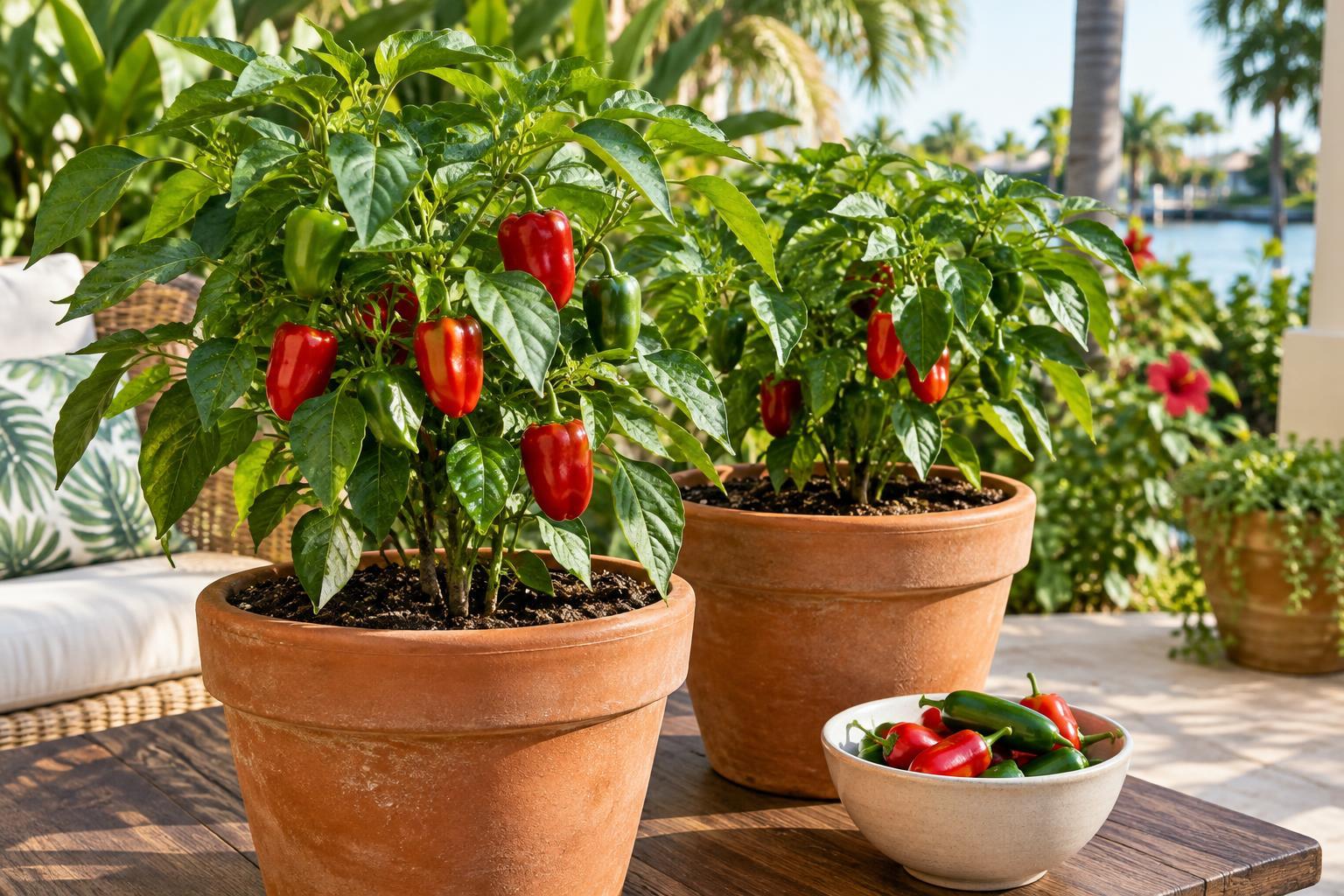
Peppers are well suited to containers because their roots can grow in a manageable space and the pots can be moved when weather turns difficult. Bell peppers, sweet frying peppers and many hot peppers are all options. If space is limited, check a plant label or seed packet for its mature size; a compact variety will be easier to support and water than a sprawling one.
Florida’s growing conditions vary considerably from north to south. In much of the state, spring and fall offer more comfortable conditions for pepper plants than the hottest stretch of summer. In colder areas, wait until frost danger has passed before setting plants outside, and plan to protect or bring pots in during a cold snap. In warmer areas, peppers may grow through more of the year, though cooler temperatures and shorter days can slow them down. Start with a healthy transplant if you want a quicker route to harvest, or start seeds indoors several weeks before you expect to plant.
Set up a pot that drains well
Give each pepper its own container with drainage holes. A pot holding about five gallons of mix is a useful starting point for one plant; a larger pot provides a better moisture buffer for a vigorous variety or a particularly exposed patio. Fill it with fresh potting mix rather than garden soil, which can compact in a container. Set the plant at roughly the same depth it grew in its nursery pot, then water thoroughly so the mix settles around the roots.
Put the pot where the plant can receive at least six hours of direct sun. Morning sun is especially useful on a hot patio; some afternoon shade may help a newly planted pepper or one exposed to intense reflected heat. Allow space around the leaves for airflow. A small stake or cage installed early can keep branches upright later, when they carry fruit. If the pot sits on a saucer, empty collected water after rain or watering so the roots are not left standing in it.
Water and feed steadily
Container mix dries faster than soil in the ground, especially during warm, breezy weather. Check it with a finger: if the upper inch feels dry, water slowly until excess runs from the drainage holes. A deep watering is more useful than a quick splash on the surface. Check again after heavy rain rather than assuming the pot is evenly moist; dense foliage can sometimes keep rain from reaching all the mix. Try to avoid repeated swings between bone-dry and soggy conditions.
Peppers also need nutrients because regular watering gradually carries them out of the pot. A fertilizer labeled for container vegetables, applied according to its directions, is a straightforward choice. More is not necessarily better: excessive feeding can encourage leafy growth without improving the harvest. If leaves yellow or growth stalls, first check moisture and drainage before adding fertilizer. A thin layer of mulch on top of the mix can slow evaporation, but leave a little space around the stem.
Respond to heat, rain and pests
A pepper plant may flower without setting much fruit during periods of intense heat or other stress. Keep caring for it rather than assuming the season is over; fruit set may improve when conditions ease. During prolonged rain, make sure drainage holes remain clear and move the pot under cover if the mix stays saturated. During a chilly spell, a movable container gives you the option to shelter the plant.
Look under leaves regularly for aphids, whiteflies or other small pests, and remove badly damaged foliage if needed. Catching a problem early is easier than treating a heavily infested plant. A gentle stream of water can dislodge some soft-bodied pests, but avoid soaking the foliage late in the day. Keep fallen leaves and spoiled fruit out of the pot, and give plants room to dry after rain.
Harvest for the way you cook
Many peppers can be picked green or allowed to ripen to their mature color. A fully colored pepper often tastes sweeter or more developed, depending on the variety, but leaving fruit on the plant longer also means waiting longer for that harvest. Use clean snips to cut peppers with a short piece of stem attached rather than pulling on brittle branches. Pick regularly and check for hidden fruit beneath the leaves.
Bring the harvest straight to the kitchen: sweet peppers can be sliced into salads or cooked until tender, while a small amount of hot pepper can brighten a sauce or relish. Hot varieties differ widely in strength, so taste cautiously and wear gloves when handling especially hot ones. At the end of a plant’s productive life, clear out the old roots, wash the container and refill it with fresh mix before planting again.