Bring a bag with a plan
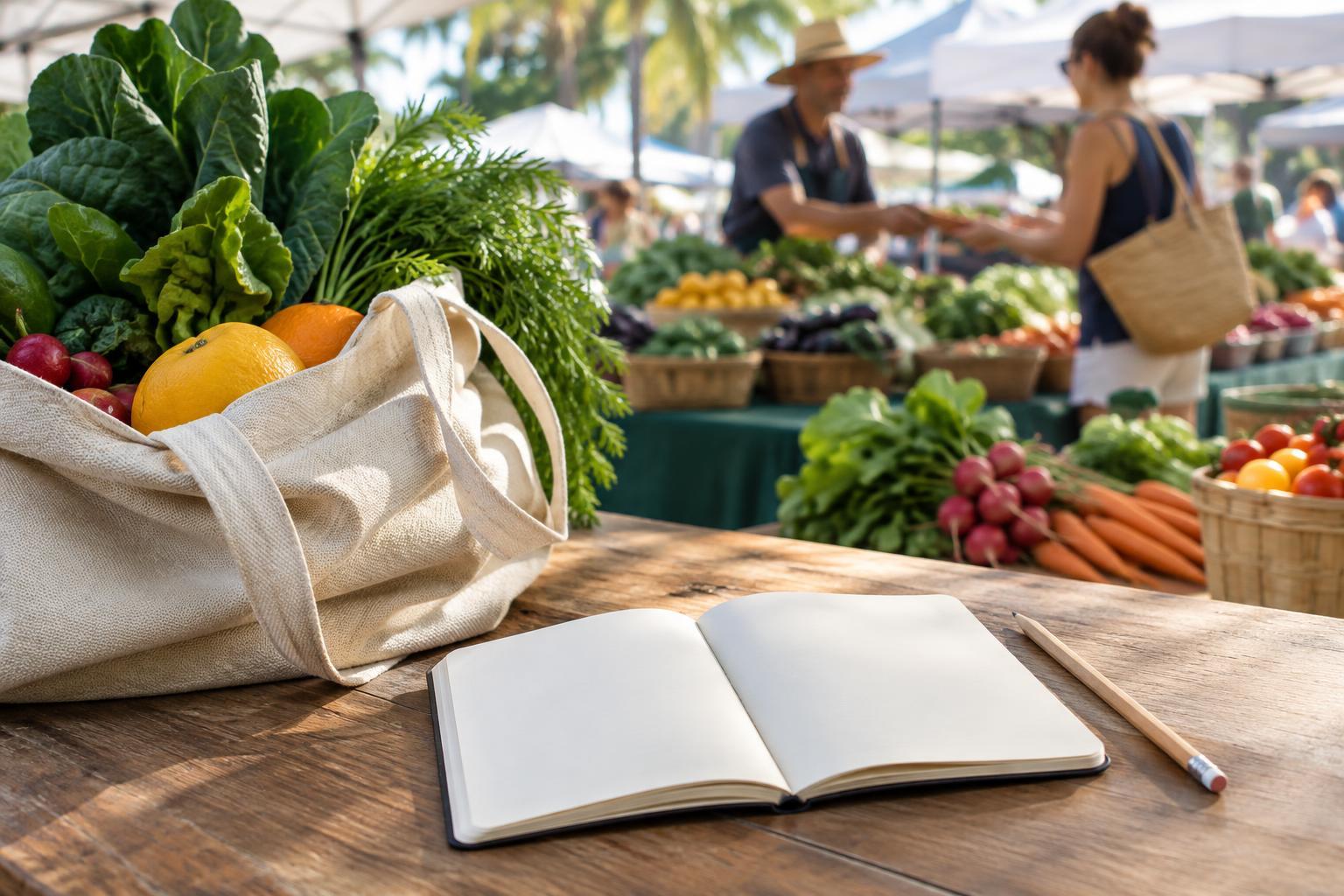
A good market bag does more than hold your purchases. It gives sturdy produce a place to support the load and delicate produce a place to ride without being squeezed. Before leaving home, gather two or three bags rather than one large tote. A bag with a flat bottom is especially useful: containers can sit upright instead of rolling into one another as you walk.
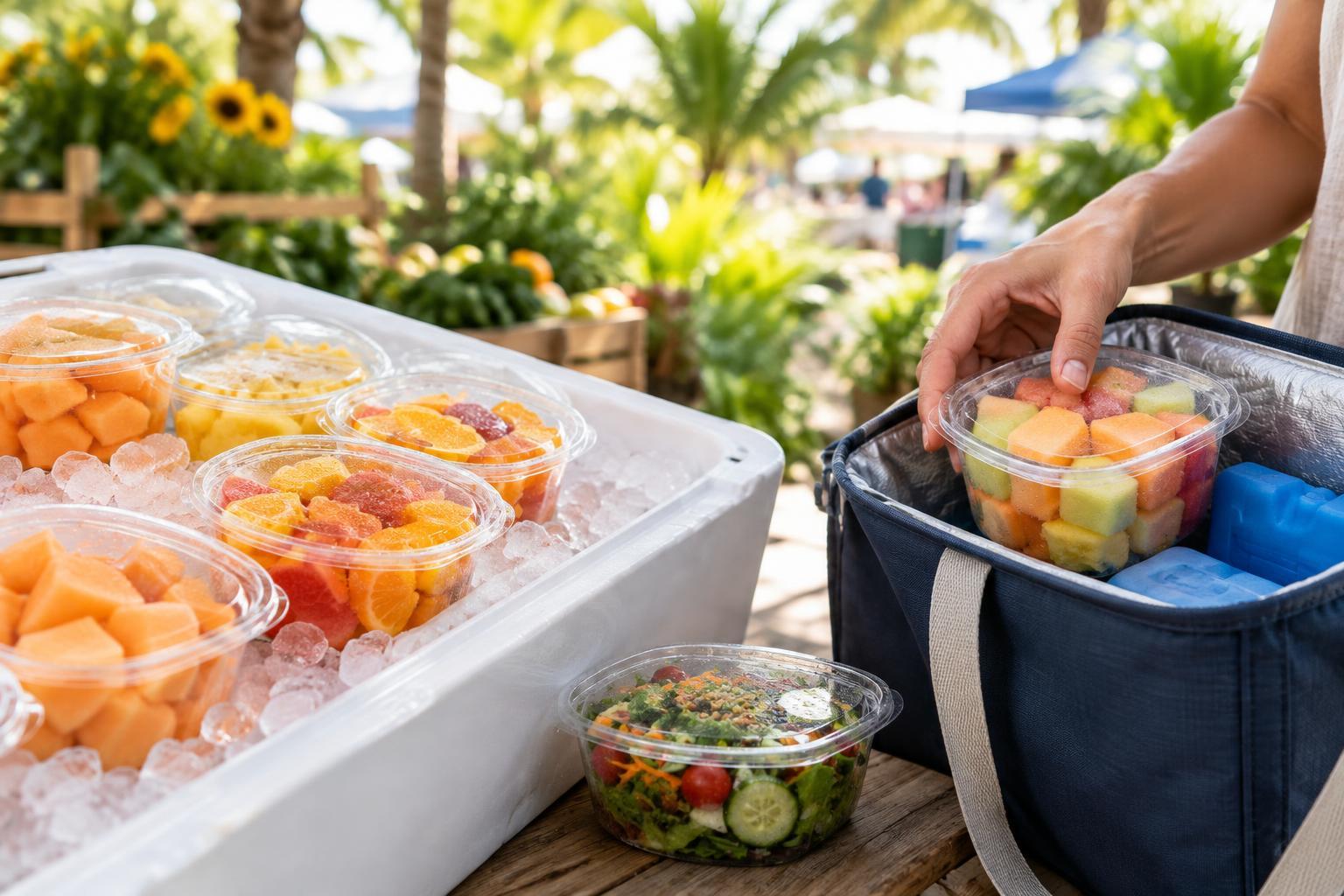
If you expect to buy tender greens or other foods that need to stay cool, bring an insulated bag or small cooler with a cold pack. Keep the pack wrapped so it does not press directly against delicate leaves or fruit. A shallow box or rigid container can also make a safe spot for berries. You do not need elaborate gear; the goal is simply to separate heavy items from fragile ones.
Shop in an order that protects your haul
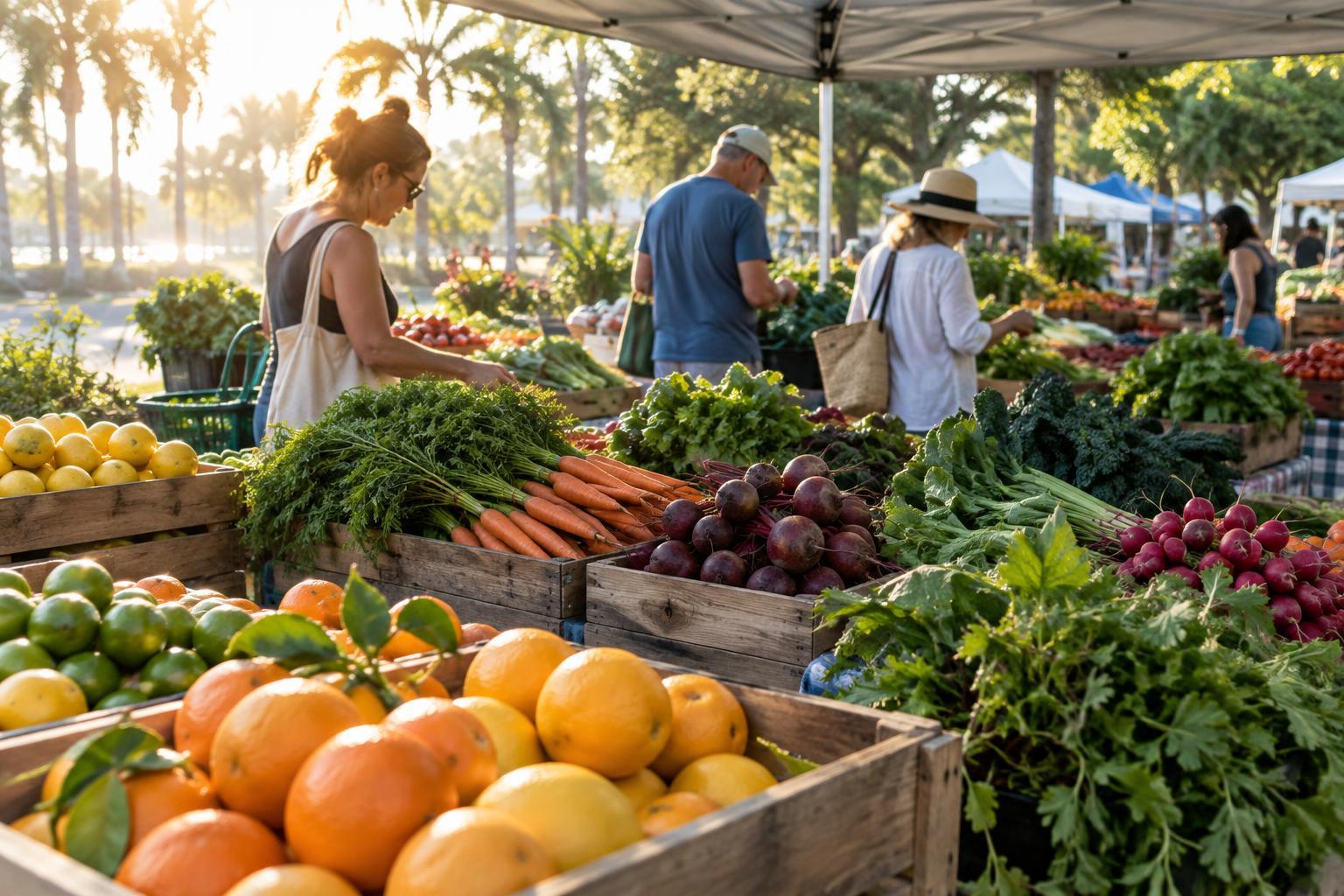
Start with items that can tolerate a little weight, such as squash or firm root vegetables, and save berries, ripe tomatoes, and leafy greens for later in your visit when practical. That way, the most delicate purchases spend less time being carried and rearranged. If a popular stand is likely to be your first stop, you can still buy there first; just set its fragile items aside in a protected bag rather than piling later purchases on top.
Take a moment at each stall to check how an item is packed. A berry container that closes securely is easier to carry than an open one, but its lid should not be forced down onto the fruit. Ask for a separate bag if you need one, or transfer the container carefully into your own rigid carrier. Keep a little open space in your bags so you can see what is underneath before adding more.
Give berries and tomatoes their own space
Berries are easily crushed by pressure, even when they come in a container. Set them on a level surface near the top of a bag, with nothing heavy above them. If you use a box, place the containers side by side rather than stacking them. Try to keep them upright on the trip home; a bag that swings against your leg or tips over in the car can undo careful packing.
Tomatoes need a different kind of protection. A firm tomato may travel well in a single layer, while a very ripe one benefits from its own small bag or an empty space beside other light produce. Avoid wedging tomatoes against jars, sharp stems, or the corners of a crowded tote. If you buy several, choose a container wide enough to let them rest without being pressed together.
Keep greens cool without soaking them
Leafy greens wilt when they sit in heat, especially in a warm car. Put them in a light bag where they will not be compressed, then move them to your insulated bag or cooler if you brought one. Keep them away from any loose ice or condensation that could leave them soggy. A clean cloth or dry paper towel can help separate leaves from a damp surface.
Plan your route home with the weather in mind. If you have other errands, consider doing them before the market rather than leaving produce in the car afterward. Once home, take greens out of tightly packed bags, remove any visibly damaged leaves, and store them according to the type you bought. Washing and drying them when you are ready to use them, or before storage if you can dry them thoroughly, helps avoid leaving excess water trapped among the leaves.
Load for the walk and the ride home
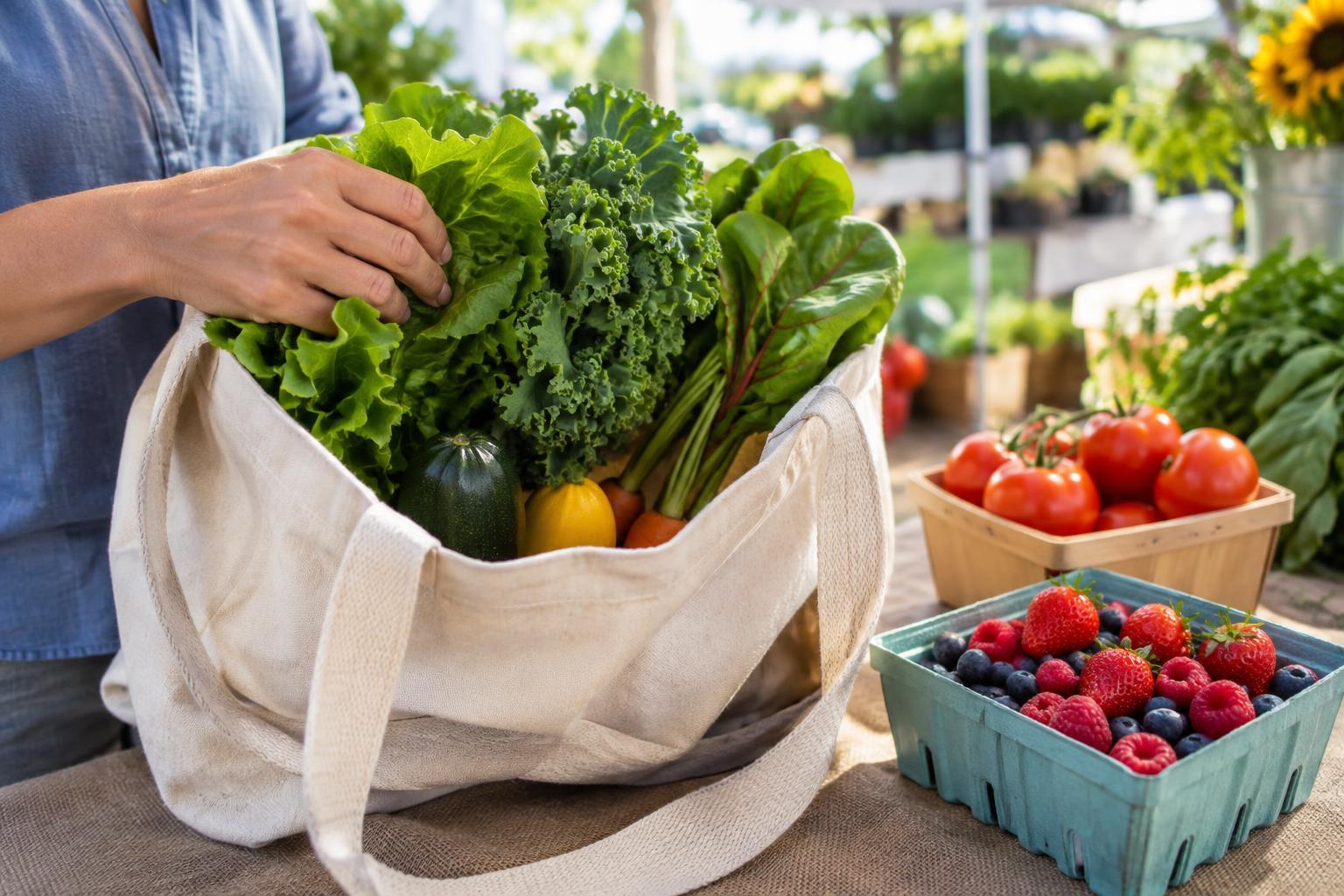
When packing, think in layers: sturdy items on the bottom, lighter items above, and the most fragile purchases in a separate protected space. Balance the weight between bags so you can carry them without swinging or dropping them. Keep anything that may leak, such as a damp bunch of herbs, away from paper packaging and fruit containers.
In the car, set bags upright on a flat floor or in a box that keeps them from sliding. Resist placing a tote on a sloped seat if its contents can topple. At home, unpack promptly and check what should be refrigerated. The routine is simple, but it makes market shopping more satisfying: you get to cook with the berries, tomatoes, and greens you chose, rather than the ones your bag left behind.