Start with your kitchen, not the stalls
Before you leave, look through your refrigerator, pantry and freezer. Note anything that needs to be used soon, then sketch out a few meals that could include fresh ingredients. If you already have rice, beans and a half-used bag of greens, you may need tomatoes and herbs more than another bundle of greens. This short check helps you spend on food that fills a gap rather than duplicates what is waiting at home.
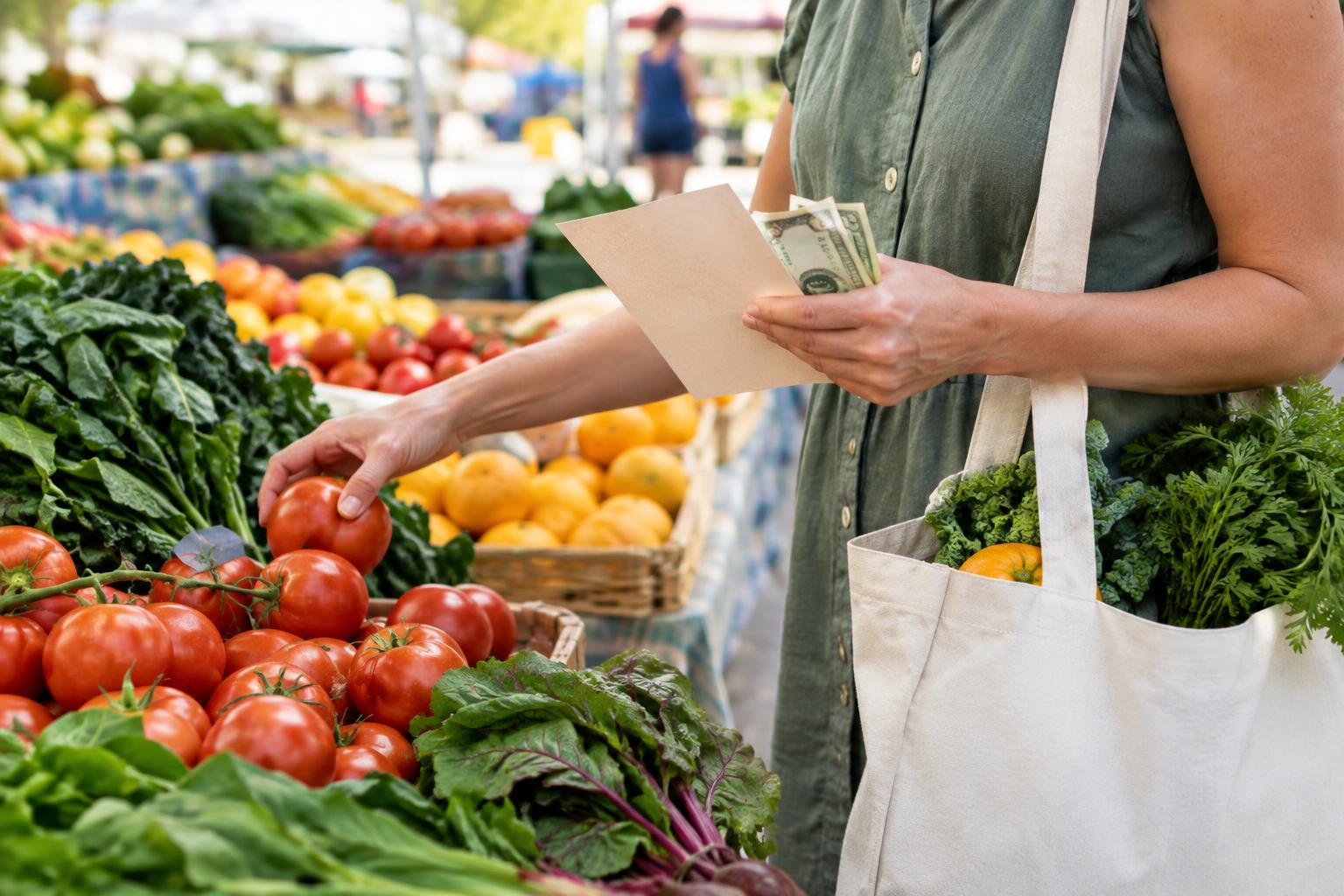
Make two lists: essentials and possibilities. Essentials are ingredients you expect to use this week; possibilities are flexible categories such as “fruit for snacks” or “one vegetable to roast.” A flexible list works well at a market because selection can vary. If the fruit you imagined is unavailable or more than you want to spend, you can choose another variety or skip it without feeling that your trip has failed.
Choose a spending cap before you shop
Set an amount that fits your food budget and the number of meals you plan to make. If you also want flowers, baked goods or a drink, decide whether those come from the same amount or from a separate treat allowance. Keeping the two amounts distinct makes it easier to see how much is available for groceries. You do not need a complicated spreadsheet; a note on your phone or a small piece of paper will do.
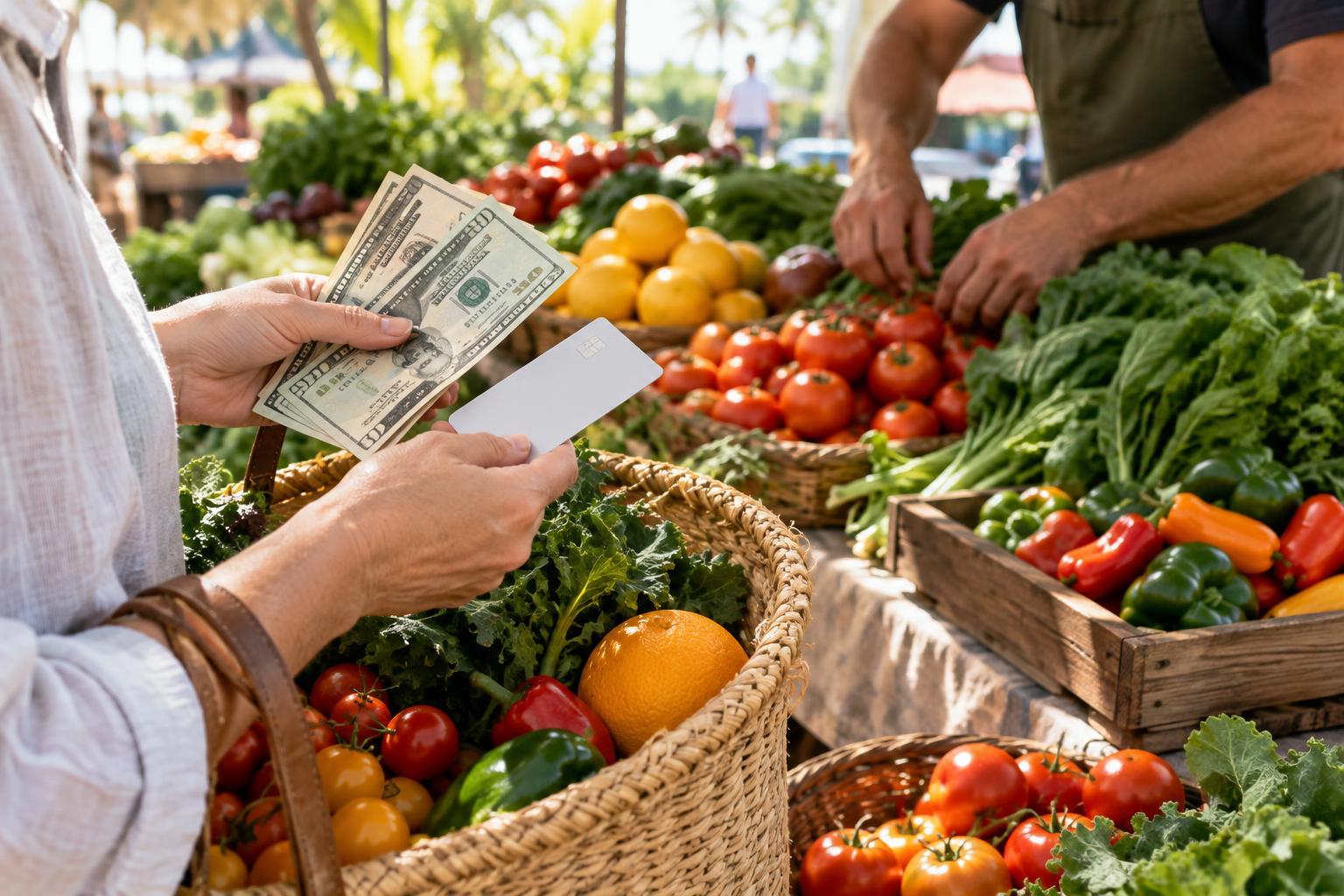
One way to divide your cap is to reserve most of it for your essentials and leave a smaller portion unassigned. That unassigned amount gives you room to try something interesting without turning every appealing stall into an exception. You can use cash as a visible limit if that suits you, but check available payment methods before relying on only one. Whatever you use to pay, track purchases as you go rather than trying to remember them at the end.
Take a first lap before committing
If the market is manageable to walk, browse once before making most purchases. Notice what is available, compare prices on items you came to buy and consider the sizes being sold. The lowest sticker price is not automatically the best choice: a large bag may cost less per item but still be a poor buy if you cannot use it before it spoils. Think about how much you can store and prepare, especially when buying delicate produce.
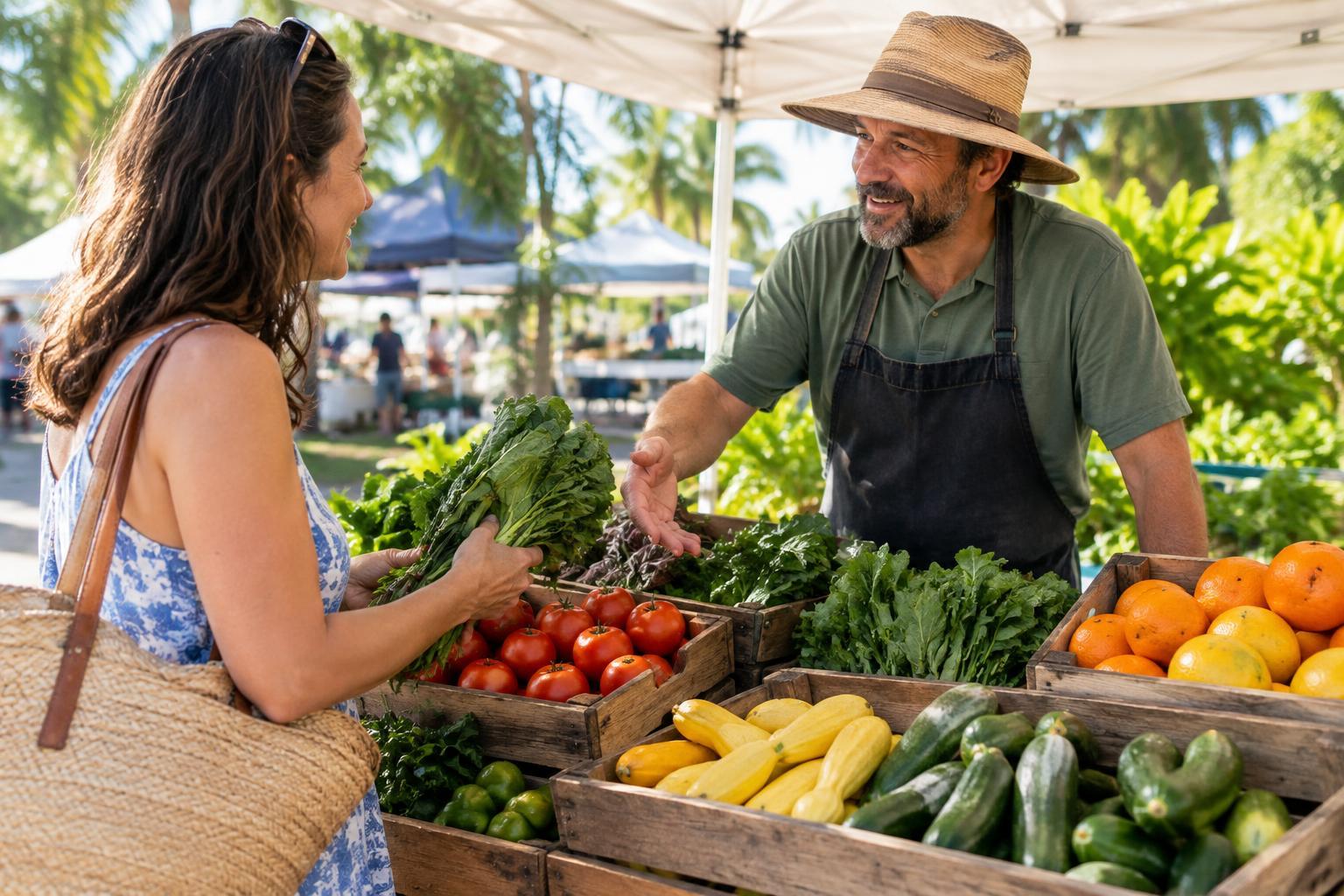
It is fine to ask a vendor about an unfamiliar ingredient, how ripe an item is or whether you can buy a smaller quantity. Ask politely and accept the answer without pressure. Market conversations can help you make a better choice, but they do not obligate you to purchase. If something catches your eye on the first lap, add it to your possibilities list and revisit it after you have covered your essentials.
Give impulse buys a useful test
An unplanned purchase is not necessarily a mistake. The question is whether it has a place in your week and your budget. Before buying, pause and ask: When will I eat this? What will I make with it? Do I have what I need to store or prepare it? Which planned purchase would I give up to fit it in? If you can answer those questions easily, the item may be a worthwhile discovery rather than a fleeting temptation.
Be especially realistic about quantities. A fragrant herb bundle may be appealing, but consider more than one way to use it if the bundle is large. A ripe fruit may be perfect for today yet difficult to keep for later. If you want to try a new ingredient, buying a modest amount reduces the pressure to build several meals around something you have never cooked. Your treat allowance can cover a spontaneous snack without quietly shrinking the money set aside for dinner.
Review what you bought when you get home
Put away delicate items promptly and move produce that needs attention soon to a visible spot. Then match your purchases to the meals you had in mind. A loose plan—such as using tender greens first and saving sturdier vegetables for later—can keep good intentions from turning into forgotten food. If you bought more of one ingredient than expected, adjust a meal before making another grocery trip.
Finally, note what worked. Did your spending cap feel comfortable? Did you use the extra item you were excited about? Was a particular quantity too much for your household? Those answers can shape your next list. The goal is not to remove spontaneity from a farmers market visit. It is to leave enough room for discovery while bringing home food you can afford, enjoy and use.