Let the soil, not the calendar, set the pace
A daily watering habit can seem sensible in Florida, especially when the afternoon feels hot enough to dry everything in sight. But heat does not always mean the soil around a vegetable’s roots is dry. A passing shower may have soaked a bed, while a plant in a nearby pot still needs water. The most useful routine is to check each growing area before turning on the hose.
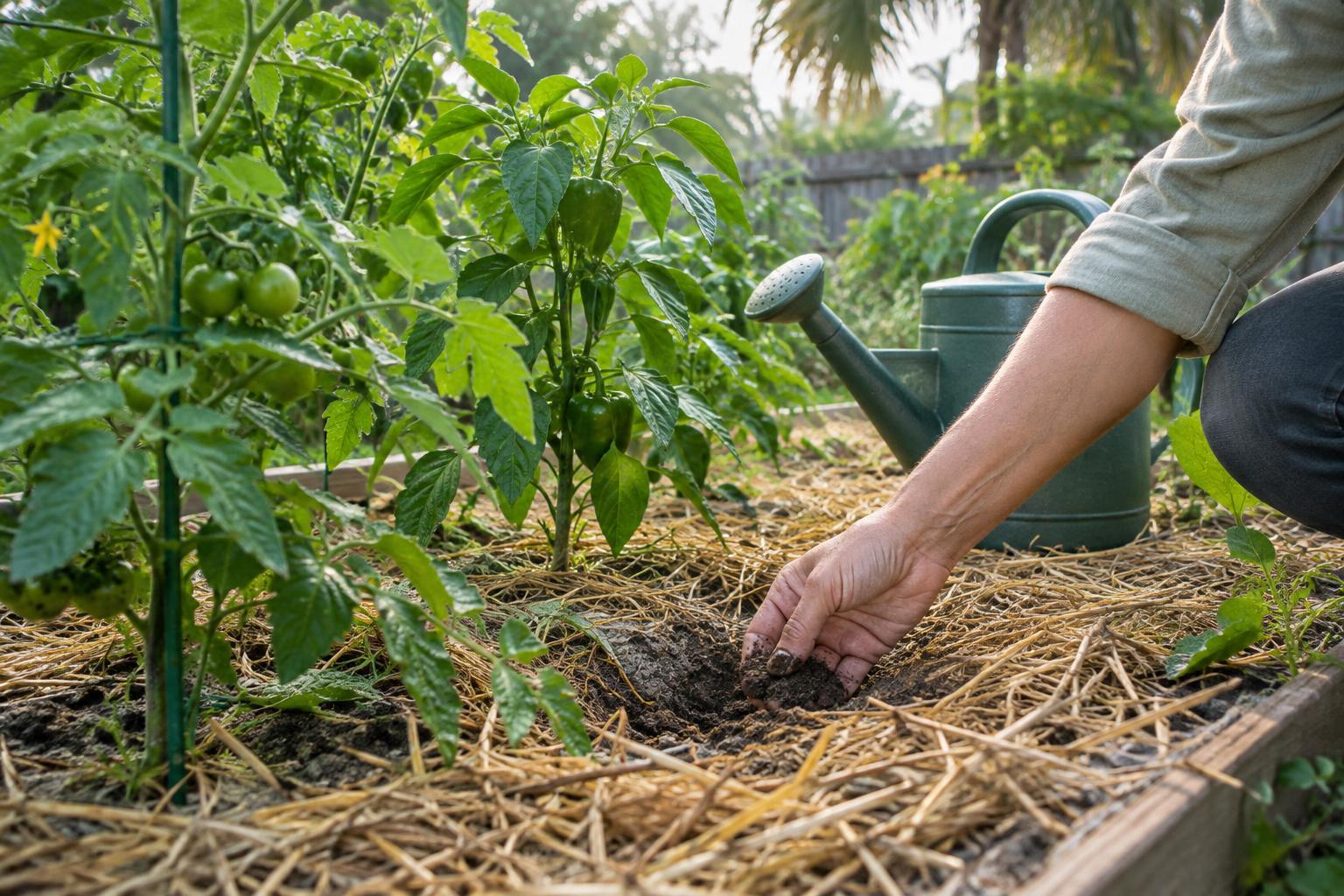
Push a finger or small trowel a couple of inches into the soil near a plant, taking care not to disturb its roots. If the soil feels noticeably moist, check again later. If it feels dry at that depth, water the root area. Check more than one spot in a large bed: an edge exposed to sun and wind may dry faster than a shaded corner. The aim is soil that stays evenly moist enough for roots to grow, not soil that remains saturated.
Water deeply, then give roots room to breathe
When watering is needed, apply it slowly near the base of the plants so it can soak into the root zone rather than run across the surface. Pause if water starts to puddle, then return once it has absorbed. Afterward, a careful check below the surface will tell you more than the appearance of a damp top layer. Frequent light sprinkles may wet only that top layer, encouraging shallow roots without helping plants through a dry spell.
Roots also need air. Soil that stays soggy can make it harder for plants to take up what they need, and poor drainage can cause problems even when a gardener has not watered recently. If water stands in a bed long after rain, consider improving drainage before adding more irrigation. Raised beds can help in some locations, but they may also dry faster; keep checking the soil rather than assuming one bed design solves every watering problem.
Adjust for Florida’s different growing conditions
Florida gardens do not all behave alike. Sandy soil often drains quickly, while soil rich in organic matter may hold moisture longer. Containers are another case entirely: their limited soil volume can dry rapidly, particularly on a sunny patio. Check pots individually and make sure water can leave through their drainage holes. An outer decorative pot that traps water can leave roots sitting in it even when the surface looks dry.
Rainfall should change your plans, too. A brief shower may dampen leaves without reaching the roots, while a longer rain may make irrigation unnecessary for a while. Check beneath mulch or the soil surface after rain rather than counting on how wet the garden looks. As plants grow larger or begin producing, they may use water differently than new seedlings. Revisit your routine whenever the weather, plant size or growing setup changes.
Use mulch and careful timing to make watering count
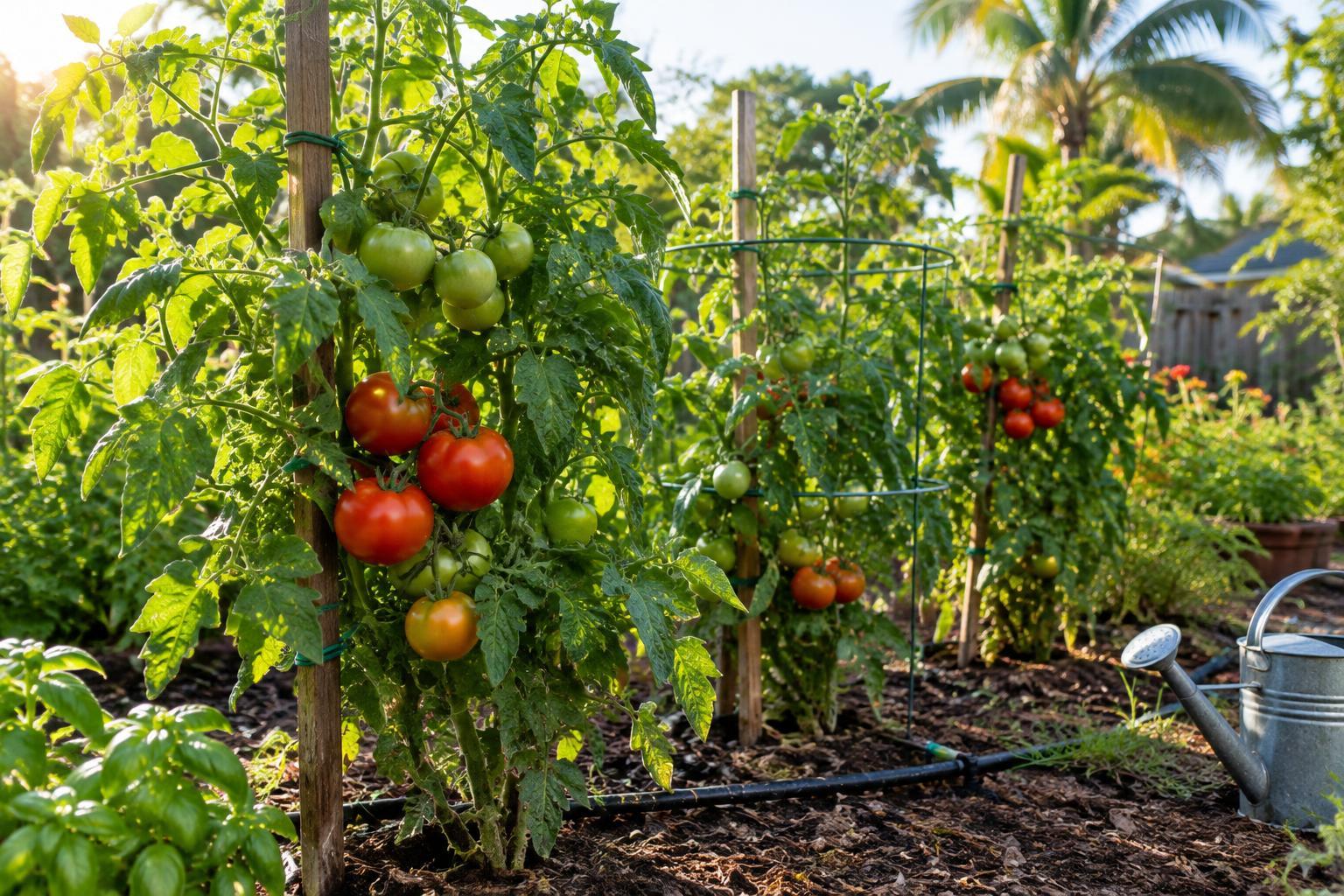
A layer of clean organic mulch around established vegetables can slow evaporation and help moderate soil moisture. Leave a little space around stems so mulch does not stay pressed against them. Mulch makes surface appearances less reliable, so lift it aside when checking the soil. Add water beneath it, close to the plants, rather than wetting paths that have no roots to support.
Watering in the morning gives you a chance to assess the garden before the day warms up. A watering can, hose directed at the soil, soaker hose or drip line can all work if they deliver water where it is needed. If you use a timer, treat it as a convenience rather than a fixed rule: turn it down or off when rain has done the job. Watch a new setup while it runs to spot leaks, runoff or areas that receive too little water.
Read plant signals with a soil check
Drooping leaves do not always call for more water. Some vegetables may wilt temporarily in intense afternoon heat and recover as conditions cool. Others droop because their roots are sitting in wet soil. Before responding, feel the soil below the surface and look at the whole plant. Persistent wilting in dry soil points toward a need for water; persistent wilting in wet soil is a reason to examine drainage and root conditions instead.
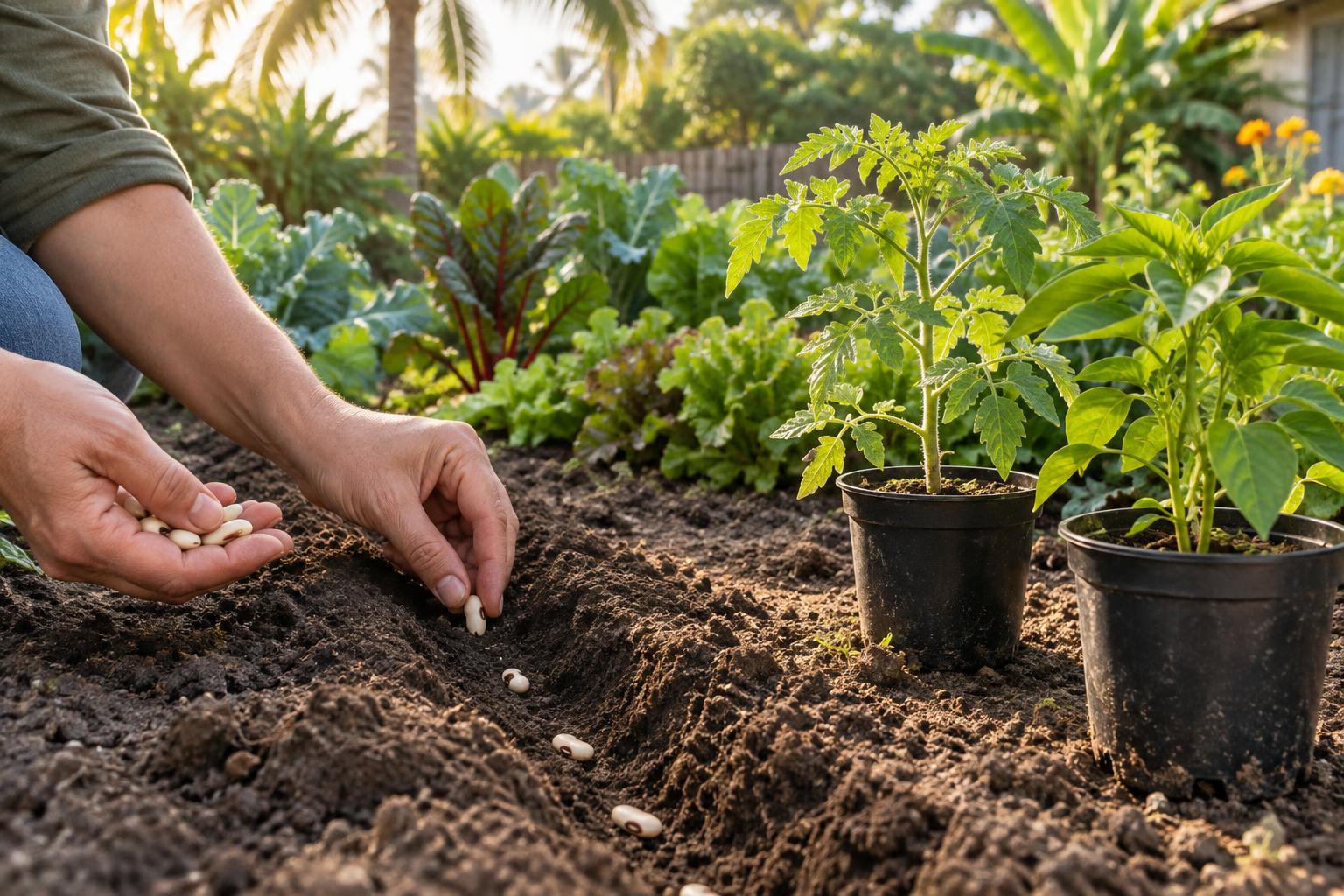
Newly planted seedlings need closer attention while their roots settle in, but that does not mean keeping their soil constantly soaked. Check them often and water gently when the root area begins to dry. Over time, a simple habit—check the soil, water thoroughly when needed, then check again before repeating—will serve a vegetable garden better than any one-size-fits-all schedule.