A dessert with a strong sense of place
Key lime pie tastes like a natural emblem of the Florida Keys: bright citrus, a cool, creamy filling, and a crust that offers a little crunch. It appears on menus and in home kitchens throughout the region. Its connection to the Keys is real as a culinary tradition, even if the details of its invention are harder to pin down.
The pie brings together ingredients that suited the area’s cooking habits at different times. Small, aromatic Key limes grew in South Florida, while canned sweetened condensed milk offered a convenient way to make a rich filling. Eggs and a simple crust completed a dessert that could be adapted to the ingredients and equipment on hand. That practical combination helps explain the pie’s staying power better than a story about one definitive inventor.
What can—and cannot—be said about its origins
Stories about Key lime pie often name a particular cook, household, or moment of invention. Such accounts are appealing, but the pie’s early history does not point neatly to one universally accepted creator. Recipes develop through repetition and exchange; similar ideas can take shape in more than one kitchen. It is more useful to think of Key lime pie as a regional dessert that became recognizable over time than as a recipe with a single fixed birthday.
Its ingredients also tell a broader story than the name alone suggests. Key limes are associated with the Keys, but the citrus did not originate there. Sweetened condensed milk, meanwhile, was a shelf-stable ingredient that worked well in a place where keeping fresh dairy could be inconvenient. Neither point diminishes the pie’s local identity. Regional food traditions are often made from ingredients that travel, then find a lasting home in a particular place.
Why two slices can look so different
A familiar filling combines lime juice, sweetened condensed milk, and egg yolks. The lime brings sharpness, the milk brings sweetness and body, and the yolks add richness. Some recipes bake the filling briefly; others use different methods or proportions. If a recipe includes eggs, follow its cooking and chilling directions rather than assuming that lime juice alone makes an uncooked filling safe to eat.
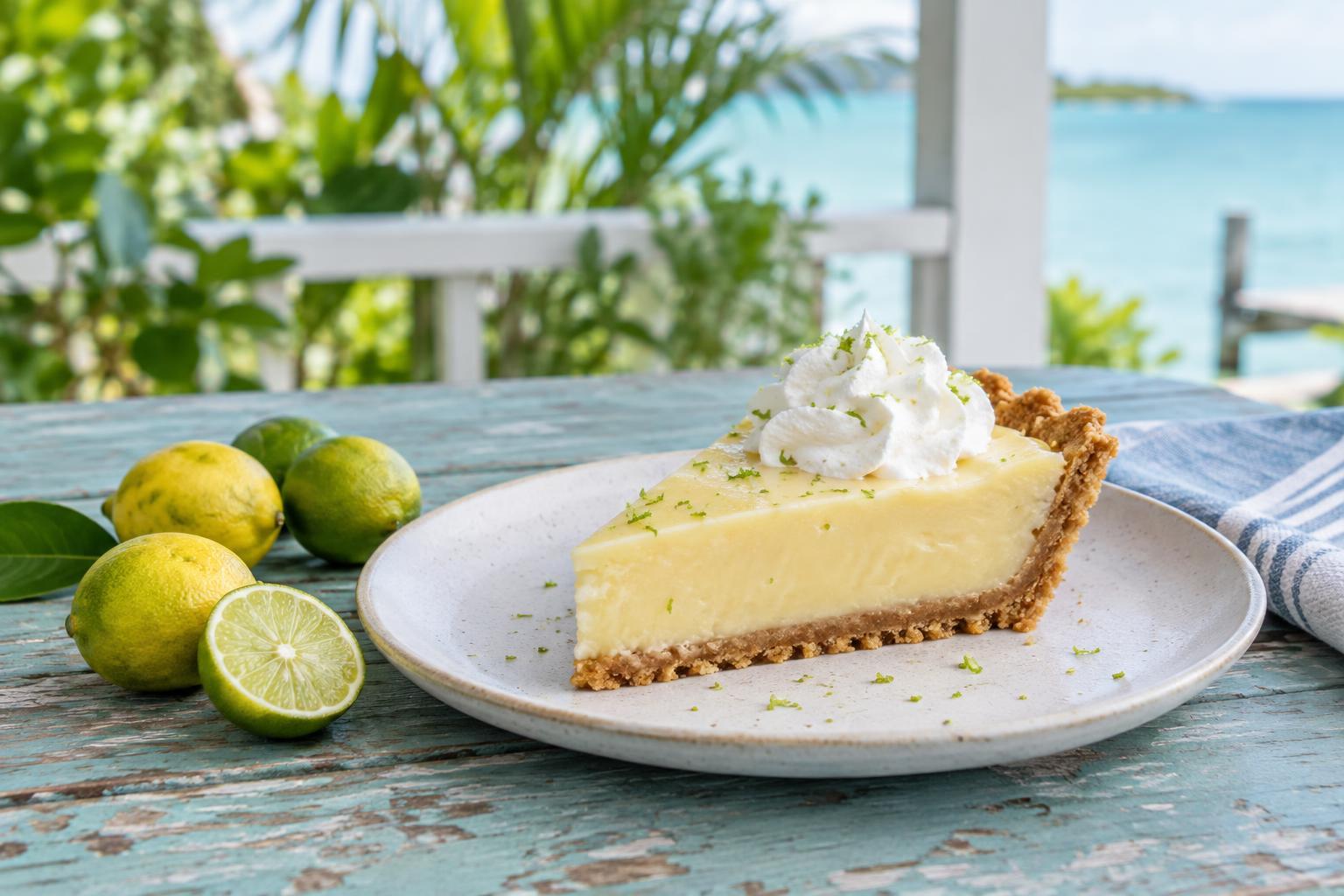
The crust and topping invite just as much variation. Graham cracker crust is common, but pastry crust and other crumb crusts also appear. A cloud of meringue gives the pie a different character from a spoonful of whipped cream; some people prefer no topping at all. These choices affect sweetness, texture, and how strongly the lime comes through. A tart slice with meringue and a sweeter slice with whipped cream can both belong to the tradition.
Three common myths worth leaving behind
First, authentic Key lime pie does not need to be bright green. Lime juice and yolks generally produce a pale filling, often with a yellow tint. A vivid green slice may contain added coloring or other ingredients, so color alone says little about flavor or quality. Look instead for a pleasing balance of citrus and sweetness.
Second, using Key limes is not the only way to make a worthwhile lime pie. Key limes have a distinctive aroma, but they can be small, seedy, and difficult to find fresh. The larger Persian limes common in grocery stores make a different but still enjoyable dessert. Bottled Key lime juice is another practical option; tasting the juice before using it can help you judge how tart the filling may be.
Third, there is no single topping or crust that settles the question of authenticity. Family preferences and kitchen circumstances shape recipes. A version that differs from one you remember is not necessarily an imitation. It may reflect another branch of the same flexible tradition.
How to appreciate the pie on its own terms
When trying a new version, notice the contrast between filling and crust, the strength of the lime aroma, and whether the sweetness leaves room for tartness. A well-chilled slice usually cuts more cleanly and makes those textures easier to appreciate. If you bake one at home, choose a reliable recipe, measure the juice, and give the finished pie the chilling time it calls for.
Key lime pie endures not because every slice follows an identical rulebook, but because a few straightforward ingredients can produce a memorable range of results. Its Florida Keys identity lives in the region’s long embrace of the dessert—and in the conversations that continue whenever someone asks how a proper slice should taste.