Let the papaya lead
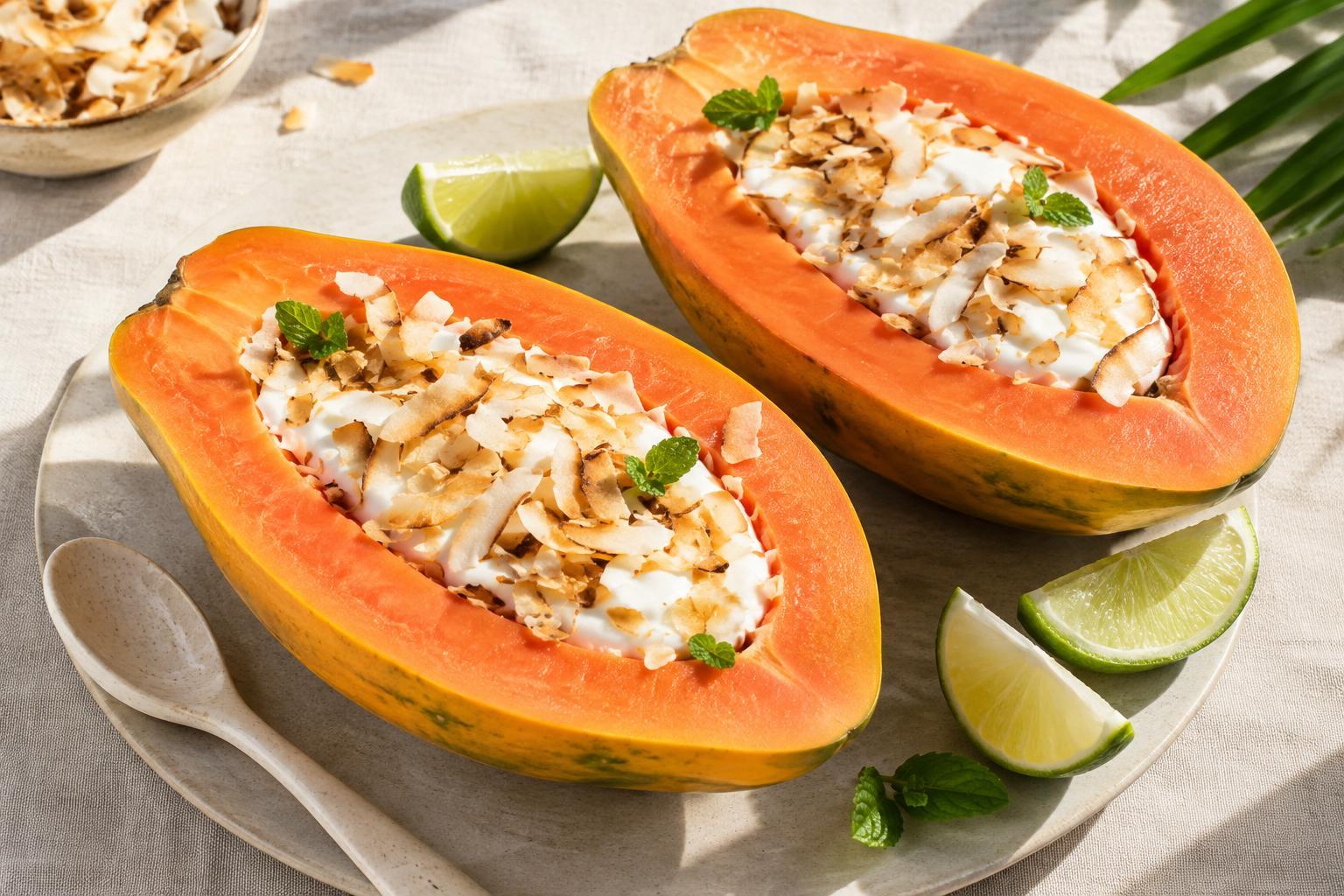
A ripe papaya makes an inviting breakfast bowl with very little preparation. Halve it, scoop out the seeds and use each half as an edible dish. Yogurt adds a cool, creamy contrast; toasted coconut brings crunch; and lime brightens the fruit’s mellow sweetness. It is a satisfying combination that leaves room for whatever else you brought home from the market.
Choose a papaya that feels heavy for its size and yields slightly to gentle pressure. Its skin may show a mix of green, yellow and orange as it ripens; feel and aroma are useful clues alongside color. A fruit that is still quite firm can sit at room temperature until it softens. If the papayas available are small, plan on serving two halves per person or cutting the fruit into pieces and using ordinary bowls.
Wash the outside of the papaya before cutting it, even though you will not eat the peel. Use a clean knife and board, then slice the fruit lengthwise. The dark seeds lift out easily with a spoon. They are not needed for this recipe, so discard them or set them aside for another use.
What you need for two bowls
Gather one medium ripe papaya, about one cup of plain yogurt, one-quarter cup of unsweetened coconut flakes and one lime. If you like a sweeter breakfast, have one or two teaspoons of honey or another preferred sweetener ready. A small pinch of salt can sharpen the flavors, but it is optional. Choose thick yogurt if you want the filling to sit neatly inside the fruit; thinner yogurt tastes just as good but may run over the edges.
To keep the papaya at the center, start with these few ingredients before adding extras. A spoonful of berries, sliced banana, chopped nuts or a little granola can make the bowls more substantial. If using granola, consider how sweet it already is before adding honey. The papaya’s size and sweetness will vary, so treat the topping amounts as a starting point rather than a strict formula.
Toast, fill and finish
Put the coconut in a dry skillet over medium-low heat. Stir frequently for a few minutes, moving the flakes around the pan so they color evenly. Take the skillet off the heat when the coconut is lightly golden and fragrant; it can darken quickly toward the end. Transfer the flakes to a plate to cool rather than leaving them in the warm pan. This small step gives the topping its crisp texture and a deeper coconut flavor.
Place each papaya half cut-side up in a shallow bowl or on a small plate that will keep it steady. Spoon about half a cup of yogurt into each hollow. Squeeze a little lime juice over the fruit and yogurt, then add the cooled coconut. Taste a bite before drizzling on any honey. If you want a brighter finish, add another squeeze of lime; if the fruit is less sweet than expected, add a modest drizzle of sweetener.
Serve with a spoon sturdy enough to scoop the papaya flesh from its peel. For guests who would rather not eat from a fruit half, cut the peeled papaya into chunks and divide it between two bowls. Layer the yogurt over the pieces and finish with the same lime and coconut. The flavor stays the same, and the chopped version is easier to share.
Make it your own without losing the crunch
The basic bowl works with many breakfast staples. For more texture, add pumpkin seeds or chopped nuts just before serving. For a gentler citrus note, use a little orange zest instead of lime juice. A dusting of cinnamon pairs well with yogurt and coconut, while fresh mint gives the bowl a cooler finish. Add one or two accents at a time so the papaya remains easy to taste.
You can toast the coconut ahead and keep it in a sealed container once completely cool. Prepare the papaya and yogurt when you are ready to eat, then scatter the coconut on top at the last moment. If you have leftover cut papaya, cover it and refrigerate it promptly. Keeping the components separate until serving helps the coconut stay crisp and makes the next bowl nearly as quick as the first.